Real Motors Reimagines Electric Motorcycle Development with AI, Robotics and Advanced Manufacturing
20 October 2026 | Interaction | By Editor Robotics Business NEWS <editor@rbnpress.com>
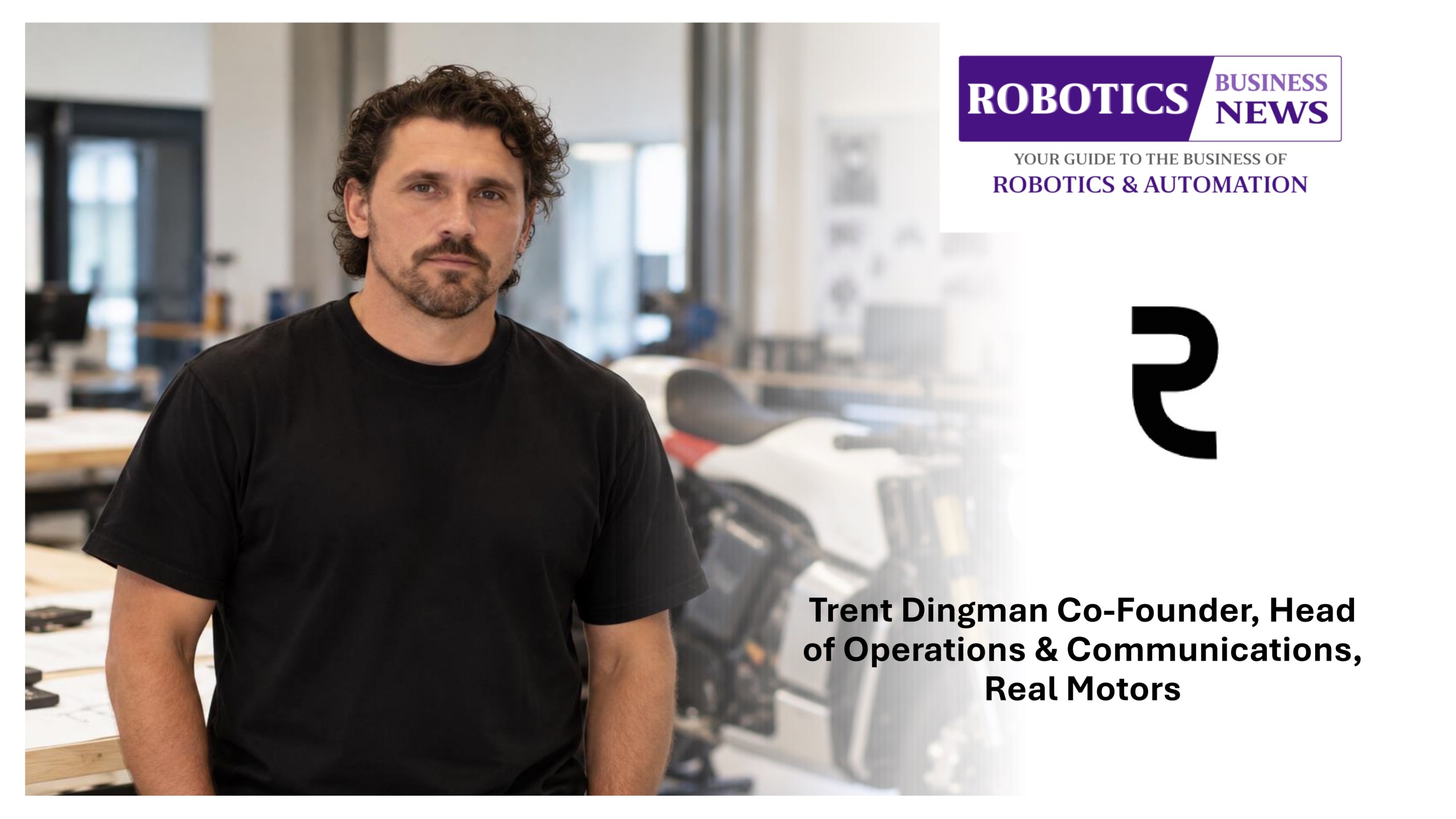
In conversation with Robotics Business News, Trent Dingman, Co-Founder and Head of Operations and Communications at Real Motors, discusses Project ARES, the Manufacto process and the future of intelligent manufacturing.
Robotics Business News spoke with Trent Dingman, Co-Founder and Head of Operations and Communications at Real Motors, about the company’s approach to electric motorcycle development and advanced manufacturing. Dingman discusses Project ARES and the Manufacto process, which aims to integrate engineering, rapid prototyping and production into a unified environment.
The conversation explores how AI, robotics and additive manufacturing can improve production flexibility, reduce development complexity and accelerate commercialization. Dingman also shares Real Motors’ vision for Future Machines, emphasizing purposeful design, engineering innovation, performance and rider experience.
How will Vance Strader’s experience in advanced electric vehicle development contribute to Real Motors’ next stage of product development and commercialization?
Vance understands what it takes to move an electric motorcycle from an engineering concept to a commercial product. His experience at Buell, Harley-Davidson and LiveWire brings valuable perspective as we move Project : ARES toward repeatable production. He will help the team develop the supply chain, manufacturing processes and quality systems that support our vision. For us, commercialization means delivering the performance and craftsmanship we imagined, consistently.
What are the key engineering challenges Real Motors is currently addressing as it prepares its next-generation machines for the market?
Our central challenge is moving from a concept to a Future Machine the market will want using our Manufacto process. That means bringing product engineering, supplier capabilities, assembly processes and quality requirements together. Every decision must work for the finished motorcycle and for the people building it. We want to preserve the same approach to Project ARES’ to Future Machine we bring to market.
How is Real Motors using robotics, AI, additive manufacturing, and advanced engineering to rethink traditional vehicle development and manufacturing?
We are developing Manufacto to bring research, rapid prototyping and production into one engineering-led environment. Our vision combines AI, robotics, additive manufacturing, and advanced engineering to shorten the distance between an idea and a physical product.
AI is a huge enabler toward strategic and lean operations even in the automotive space. AI tools give us the ability to operate an EV company with incredibly small and talented teams.
What role do you expect automation and robotics to play in creating a more flexible and efficient manufacturing process at Real Motors?
We expect automation and robotics to help us achieve consistency while keeping production adaptable.. This allows the engineering team more time for development, problem-solving and craftsmanship. While automation and robotics are one way to eliminate labor from manufacturing, we invest in upstream advanced engineering to really re-think how vehicles are designed to even reduce the complexity the equipment used in automation.
How does Real Motors approach the balance between cutting-edge technology, performance, reliability, and the user experience?
We start with how we want someone to feel when they ride the machine. Our Electric Analogue philosophy uses advanced technology to strengthen that connection. Performance needs to feel intuitive, design needs to have purpose, and reliability needs to earn the rider’s confidence.
What lessons from developing ARES could influence the design and manufacturing of Real Motors’ future products?
Project ARES is our first proving ground for both the product philosophy and Manufacto. The development has taught us new things related to design, engineering and production and challenging the status quo. We want each Future Machine project to push our capabilities in delivering the best design, engineering and experience.
How do you see advanced manufacturing technologies changing the economics and speed of bringing highly engineered physical products to market?
The purpose of Manufacto is to change the economics and speed of turning engineering ideas into physical products. By bringing computational design, rapid R&D and manufacturing into one environment, we aim to shorten development cycles, reduce costly handoffs, and lower the capital required to bring complex machines to market. AI, robotics and additive manufacturing give us more flexibility to test, refine, and build as the engineering evolves. Our principle is simple: manufacturing adapts to engineering. Project : ARES is our first proving ground for that approach.
What is Real Motors’ long-term vision for “Future Machines,” and how could AI, robotics, and intelligent manufacturing shape that vision?
Our entire business model is built around Future Machines. We want to create Future Machines that explore new possibilities in engineering, materials, performance and human interaction—machines with soul that people want to experience. AI, robotics and intelligent manufacturing could give us more freedom to pursue those ideas and bring them into production.