TÜV SÜD, Accenture and NVIDIA Advance Safety Certification for Physical AI in Industrial Automation
13 November 2026 | Interaction | By Editor Robotics Business NEWS <editor@rbnpress.com>
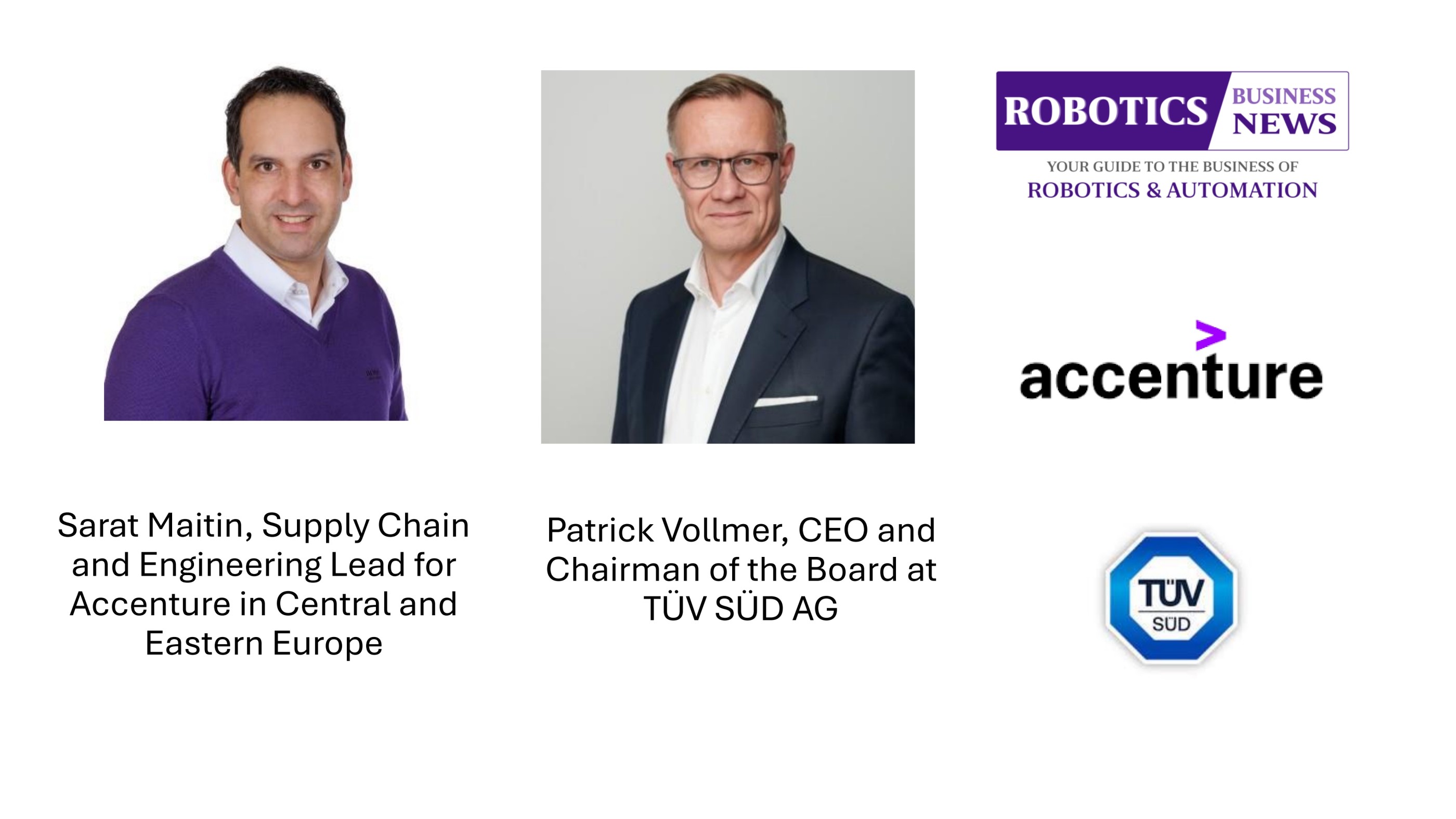
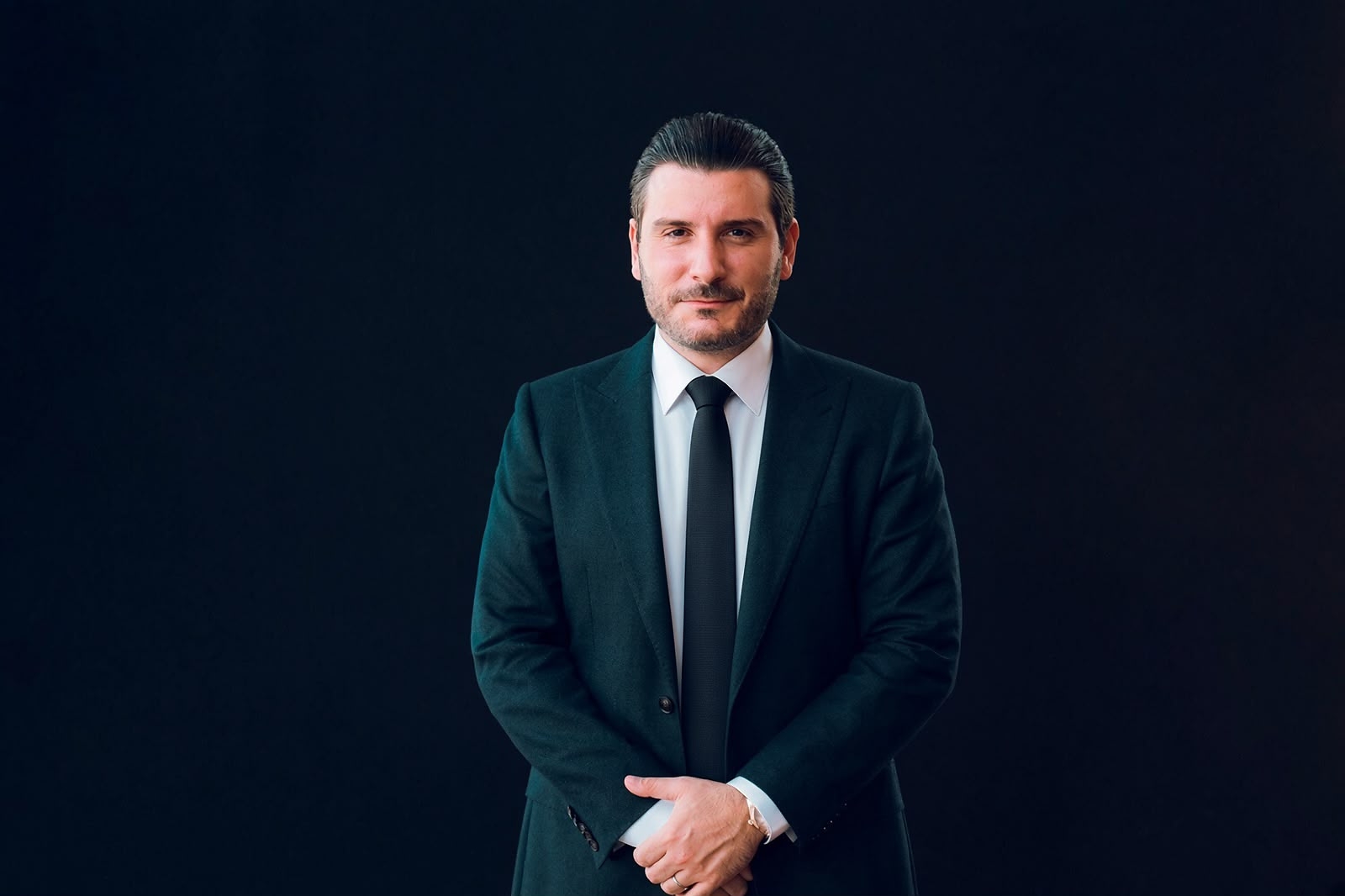
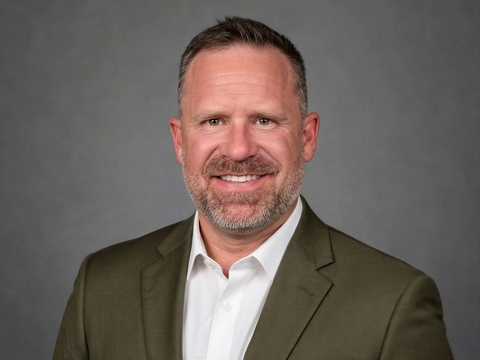
In conversation with Robotics Business News, Patrick Vollmer, CEO and Chairman of the Board at TÜV SÜD AG, and Sarat Maitin, Supply Chain and Engineering Lead for Accenture in Central and Eastern Europe, discuss Physical AI safety, simulation-driven validation, digital twins, and certification frameworks for next-generation autonomous robots.
TÜV SÜD, Accenture and NVIDIA are collaborating to advance safety testing and certification for Physical AI systems in automated factories and warehouses. Through their Physical AI Safety Suite, the partners aim to integrate simulation, digital twins and AI-driven validation into industrial safety assurance. In conversation with Robotics Business News, Patrick Vollmer, CEO and Chairman of the Board at TÜV SÜD AG, and Sarat Maitin, Supply Chain and Engineering Lead for Accenture in Central and Eastern Europe, discuss certification challenges, autonomous robotics, regulatory requirements and the future of safe industrial automation.
What motivated TÜV SÜD to collaborate with Accenture and NVIDIA to advance the certification of Physical AI systems in automated factories and warehouses?
Patrick Vollmer: “Physical AI represents a fundamental shift for assurance. As AI moves beyond software and begins to perceive, make decisions and act in the physical world, it brings together AI development, robotics, simulation, functional safety and regulatory compliance. The way we test, validate and ultimately build trust in these systems must therefore evolve as well.
No single organization can address all these dimensions alone. TÜV SÜD contributes deep expertise in safety, testing, certification and regulatory compliance. Accenture brings experience in technology integration, while NVIDIA provides leading technologies for AI development and simulation.
Working with strong partners is an important way for TÜV SÜD to help accelerate innovation in industry. The Physical AI Safety Suite is a good example: By combining our complementary strengths, we can integrate safety and independent assurance much earlier in the development process and help manufacturers move Physical AI from controlled pilots into real-world operations.”
How will this collaboration establish new approaches for testing, validating, and certifying AI-powered robots operating in dynamic industrial environments?
Sarat Maitin: “Today, safety concepts are typically validated and accepted once equipment is installed and layouts are fixed. At a medium-sized plant, that process can take several weeks, and late findings mean rework.
The Physical AI Safety Suite starts safety assurance much earlier by moving a large part of this work into the virtual world, using digital twins, AI agents and simulation. Hazards and worst-case scenarios that are hard to reproduce physically can be explored before the first robot arrives on site, so on-site testing can focus on the risks that really matter.
The concept also shifts safety assurance from one-time acceptance to continuous safety. A physical AI system adapts to its environment and its models evolve, so safety can’t be a snapshot taken at commissioning. It requires clear boundaries, traceable evidence of what the system may do and why, and structured reassessment whenever something relevant changes.”
What are the biggest safety and reliability challenges associated with deploying autonomous robots and Physical AI systems at industrial scale?
Sarat Maitin: “Industry has mastered automation behind safety fences, with robots in defined cells and predictable, rule-based behavior. Physical AI moves into spaces shared by robots and people, performing tasks not automated before. This fundamentally changes the question of safety.
The first challenge is non-determinism. AI-driven systems perceive, decide and adapt, which makes them valuable but means not every situation can be anticipated. Another important issue is heterogeneity. Vehicles and robots from different manufacturers share the floor with people and manual processes, so safety must be assessed at system level. Perception is another challenge. Onboard sensors have limited fields of view and can't see behind racks or other obstacles. Outside-in perception isn’t prevalent yet. And the fourth is dealing with changes to layouts, vehicle types and software or AI model updates, each of which can affect safety.
At the scale of an industrial facility, these challenges multiply. That makes safety the pacing factor for physical AI adoption and must be rethought, not carried over from the fenced world.”
How can certification frameworks keep pace with rapidly evolving AI models, autonomous decision-making, and human-robot collaboration?
Patrick Vollmer: “Traditional conformity assessment has generally focused on a clearly defined product at a specific point in time. AI-enabled systems require a broader approach because their behavior can be affected by model updates, new data and changes in the operating environment.
We therefore need to move from point-in-time certification towards lifecycle-based assurance. This means looking at the system as a whole and integrating independent assurance from the early stages of development, rather than only testing the finished product.
Crucially, assurance cannot stop at deployment. As AI systems evolve in operation, we need continuous monitoring and clear triggers for reassessment whenever safety-relevant changes occur. Within the TÜV AI Lab, we are developing approaches to validate AI models and their subsequent modifications, with the aim of maintaining confidence in their safety and performance throughout the entire lifecycle.”
How will NVIDIA technologies, including simulation and digital twins, support the development and validation of safer robotic systems?
Sarat Maitin: “Simulation and digital twins let us test the world before we change it. A physically accurate digital twin of a facility, with its layout, equipment and people, is the environment where robots and safety concepts are validated before deployment. NVIDIA's technologies make this possible and are central to the solutions we build with partners like TÜV SÜD and, for example, in our global Physical AI Center of Excellence.
In practice, that means three things: First, coverage. Simulation can run worst-case scenarios and rare edge cases at a scale that physical tests can't match. Second, earlier evidence. Hazards identified at the design stage can be fixed when it is cheapest: before equipment is installed. Third, reuse. A digital twin doesn't expire after commissioning: when a layout or robot type changes, scenarios can be re-run instead of reassessing from scratch.
Simulation can only approximate sensor input, hardware tolerances and latencies, so physical verification remains essential; the aim is to arrive on site far better prepared.”
What role will TÜV SÜD play in helping manufacturers build trust in AI-driven automation while meeting international safety and regulatory requirements?
Patrick Vollmer: “TÜV SÜD’s role is to provide independent assurance. Safety has been at the heart of our mission for 160 years, and that mission does not change as machines and robots become more autonomous.
What TÜV SÜD brings is a combination that is difficult to find in one organization. We understand AI from a technical perspective, including how models are developed, validated and monitored, as well as from the perspective of regulation, standards, safety and independent assurance.
At the same time, we bring decades of domain expertise in complex industrial and safety-critical systems. This allows us to connect the technical behavior of AI with the environment in which it is deployed, the risks it creates and the regulatory and safety requirements it must meet.
This combination is particularly important for Physical AI, where the AI model cannot be assessed in isolation. We need to understand the complete system and how it interacts with people and the physical world. We do not promise safety at the push of a button; we provide a structured and credible basis for making informed decisions throughout the system’s lifecycle.”
How will standardized testing and certification help manufacturers accelerate Physical AI adoption while reducing deployment risks and operational costs?
Sarat Maitin: “Established standards such as ISO 3691-4 for driverless industrial trucks, including AMRs, are the foundation of safe automation. In many industrial countries, certification against them is mandatory before automated facilities can go live. The standards aren't the problem but essential to safety. The challenge is how long it takes to navigate them, and how late in the process it usually happens.
A simulation-supported approach changes the economics: When safety and certification are addressed in engineering, issues surface while still easy to fix, not as costly rework in live operations. Simulation also enables repeatability, so that the next site, layout or vehicle type doesn't start from zero. Finally, simulation lowers the entry barrier. Physical AI often pays off only at a certain fleet size because safety effort per asset is too high. We want to lower that threshold for operations with a handful of assets.
It’s not about safety versus efficiency. Operations become efficient precisely because they are safe by design from the start.”
Looking ahead, what are TÜV SÜD’s priorities for developing certification standards for humanoid robots, autonomous mobile robots, and other Physical AI applications?
Patrick Vollmer: “Our priority is not simply to wait for standards to emerge, but to help shape them and test how they work in practice.
TÜV SÜD experts contribute to AI standardization at national, European and international levels, including emerging areas such as AI and functional safety. This allows us to combine technological expertise with our experience in regulation, standardization and complex industrial applications.
Where draft standards and methodologies are sufficiently mature, we also want to pilot them with customers in real-world applications. This creates an important feedback loop: we can assess how emerging requirements work in practice, help customers prepare at an early stage and bring practical insights back into the standardization process.
Ultimately, our ambition is to connect standardization, validation and certification so that the assurance framework evolves alongside Physical AI technology.”