Driving the Future of Advanced Manufacturing: A Conversation with Dr. Jaret C. Riddick on AI, Autonomy, and Robotics Innovation
07 May 2026 | Interaction | By Editor Robotics Business NEWS <editor@rbnpress.com>
Former Pentagon Principal Director for Autonomy discusses how autonomous systems, additive manufacturing, and regional innovation hubs are reshaping the future of U.S. manufacturing, defense technologies, and workforce development.
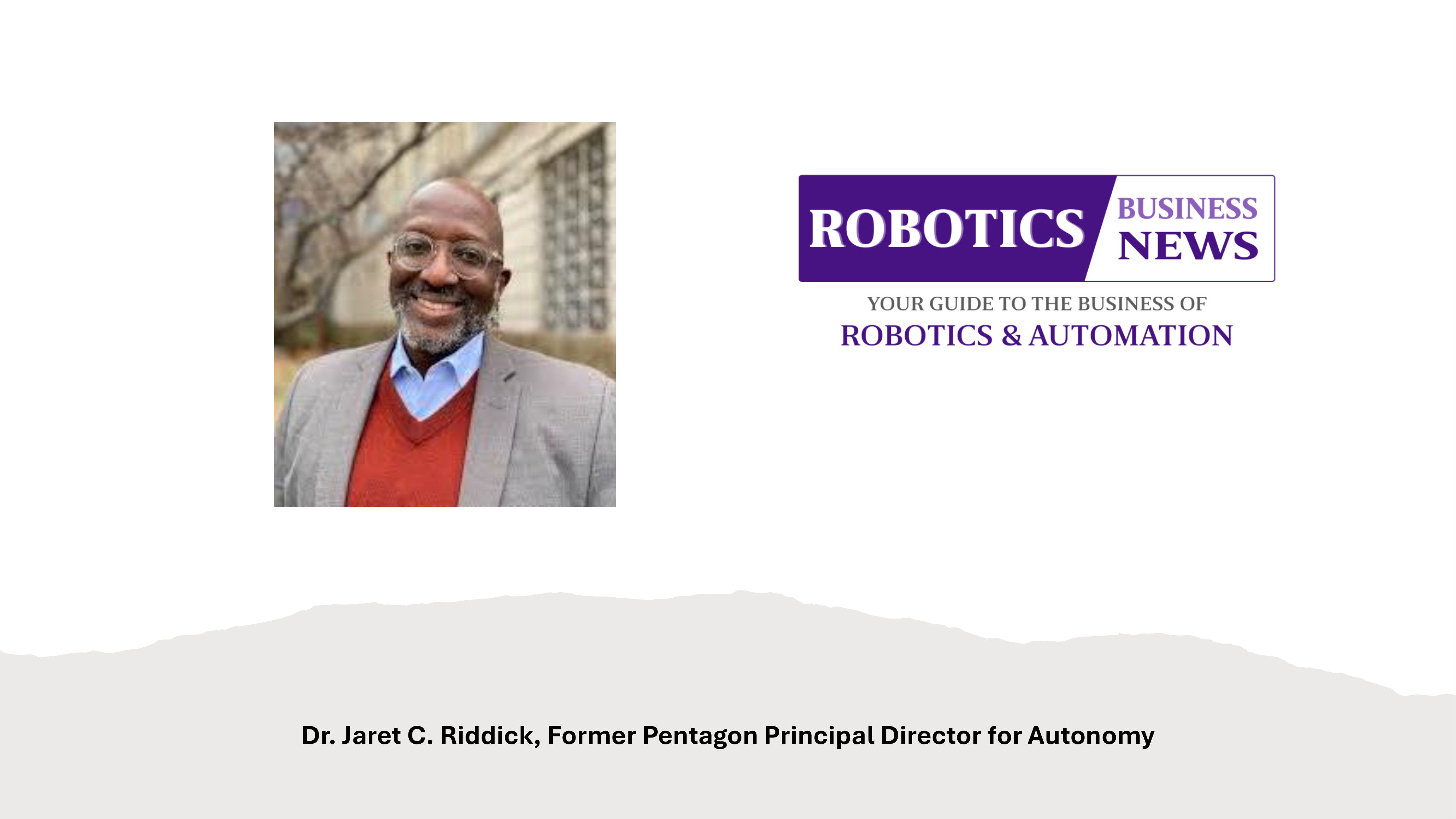
In this exclusive conversation with Robotics Business News, Dr. Jaret C. Riddick discusses the growing convergence of artificial intelligence, autonomy, robotics, and advanced manufacturing. From defense-driven innovation and drone technologies to workforce development and regional manufacturing ecosystems, Dr. Riddick shares how emerging technologies are transforming the future of industrial production and strengthening America’s global competitiveness.
What makes the Advanced Manufacturing User Expo (AMUX) a critical platform for advancing innovation in the Mahoning Valley and beyond?
The focus of this event is really on day-to-day applications of advanced manufacturing technologies, so it's accessible to all manufacturers, not just those working in what are generally considered to be advanced industries. It gives companies a chance to learn more about how technology can transform their manufacturing facility, whether to reduce waste, improve efficiency, increase speed to market, or achieve some other goal.
How does Dr. Jaret C. Riddick’s experience as the Pentagon’s former Principal Director for Autonomy shape the themes and discussions expected at this year’s keynote?
His professional experience and professional accreditations directly align with both the Youngstown Innovation Hub for Aerospace and Defense, as well as the advanced technologies that we're working to promote, including additive manufacturing and autonomy. More to the point, his most recent work is looking at changes in the labor market - a critical topic to everyone these days, but particularly those that need more technically skilled workers. His remarks will take the event to a higher level of critical thinking, rather than just application based discussions.
What key insights on autonomous systems and artificial intelligence can attendees expect from the keynote session?
The Youngstown success story really is a regional story, with Youngstown as the centerpiece; arguably ground zero for additive manufacturing research and development in the United States. This harkens back to the community's involvement in establishing America Makes over a decade ago now.
With that context, when we think about the explosion of interest in unmanned and robotic systems both commercially and for defense, means-of-production will be key to meeting that demand domestically. We've seen the role that additive manufacturing has played in accelerating research by enabling all sorts of prototype and experimental vehicles to design and iterate rapidly. Now, when we say defense and aerospace, that increasingly means drones. For example, to reach the tremendous demands of current DOW programs to procure thousands of domestically-produced drones, advanced manufacturing that incorporates advanced computing and AI will be called upon. Not only is additive and advanced manufacturing key to future production but AI and autonomy are also integrated into advanced manufacturing techniques to drive automation, speed, and scale. While we are in transition from traditional to advanced manufacturing this region also has the opportunity to drive the formation of new pipelines of talent.
The key insight: what does it look like to drive the advanced manufacturing capability that will support commercial and defense demand in the future? And how can regional assets be aligned to produce pipelines of talent?
How is the Mahoning Valley positioning itself as a hub for advanced manufacturing and emerging technologies?
The Mahoning Valley has been working to become a center for advanced manufacturing since even before America Makes located on the YBI campus in 2012. Since that time, YBI and Youngstown State University have partnered on numerous initiatives to secure pieces of additive manufacturing equipment, including XJet Ceramic and Metal Printers and a Mazak Hybrid System. YBI has developed a team of engineers to support the adoption of advanced manufacturing technologies, and was recently designated as the lead for a Center of Excellence for Advanced Manufacturing for technology startups in northern Ohio. And, most recently, America Makes led the region in securing designation as an Innovation Hub for Aerospace and Defense through the Ohio Department of Development.
In what ways does AMUX foster collaboration between manufacturers, technologists, and economic development leaders?
AMUX is the tip of the spear in our efforts to foster collaboration. It not only gives people exposure to new ideas and technologies, but it provides access to technical experts and other resources to identify solutions to problems. While the information provided in the individual sessions is valuable, it often takes getting out of your office and meeting new people with new ideas to initiate or accelerate change. We want AMUX to be a place where ideas are shared and connections made.
How are defense-driven innovations in robotics and autonomy influencing the future of commercial manufacturing sectors?
It's opening up opportunities for our existing manufacturing sector that are working in other market verticals like ag, automotive to pivot and rethink their market sectors. The best case scenario in technology commercialization is when there is a clear demand signal that creates new opportunities for the development and deployment of new technologies from both government and industry sectors. With the emergence of drone technologies as a critical strategy in modern warfare, the speed to market (and deployment) of new technologies is happening at a faster pace than ever before.
What role do regional innovation hubs and incubators play in accelerating advanced manufacturing capabilities?
While there are certainly parts of the country that have both the financial and human capital needed to invest in new technologies, for the most part, the "fly-over" regions (e.g. the Midwest), need support to create connections, provide resources, and drive technology development, commercialization and adoption. It's not that there isn't great technology being developed in the Midwest, but it often feels like it's happening in a vacuum, without support from the community. Tech Based Economic Development (TBED) organizations make sure that these points of light get the support that they need, whether its access to capital, introductions to marquee customers, grant writing, or some other expertise that will speed their product development and shorten the time to market.
Looking ahead, how can events like AMUX contribute to strengthening the U.S. manufacturing ecosystem and global competitiveness?
Every strength is also a weakness, and that's true in this instance as well. The vast size of the United States makes it very difficult for Small to Medium Manufacturers (SMMs) to find the resources that they need to enter the Defense Industrial Base - or to grow within it. At least a portion of the AMUX event is designed to take a direct run at this problem through education, creating seeker-solver opportunities and engaging with SMMs in a meaningful way to get them into the game.