Inside SoftBank Robotics’ U.S. Expansion Strategy for Autonomous Cooking Robots STEAMA and FLAMA
19 May 2026 | Interaction | By Editor Robotics Business NEWS <editor@rbnpress.com>
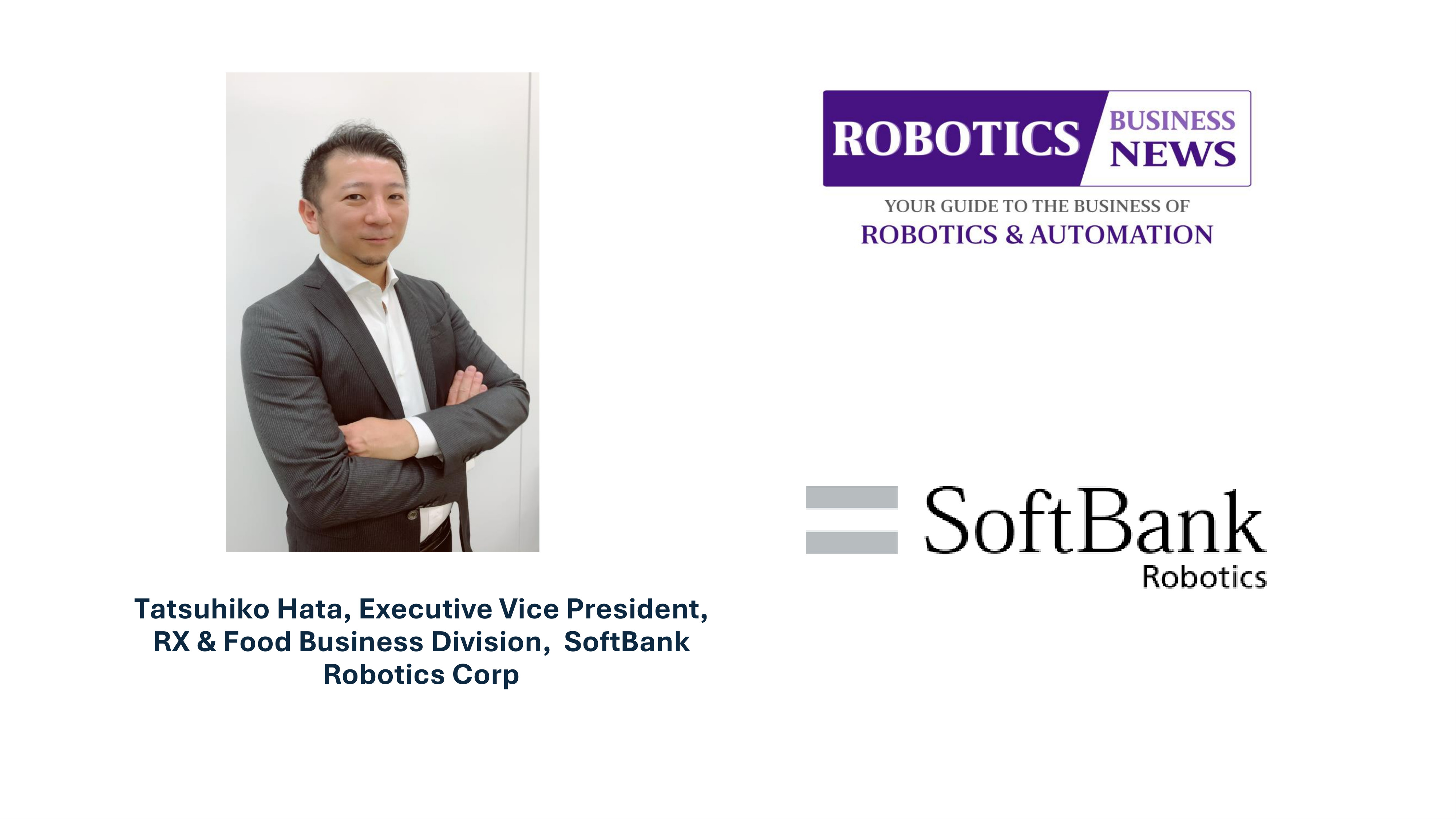
Tatsuhiko Hata discusses the U.S. launch of STEAMA and FLAMA, the future of AI-powered kitchen automation, and how SoftBank Robotics is helping restaurants tackle labor shortages, operational consistency, and scalable foodservice innovation through FOOD DX expertise developed in Japan.
As labor shortages, rising operational costs, and demand for faster service reshape the global restaurant industry, robotics and AI-powered kitchen automation are moving from concept to commercial reality. In this interview with Robotics Business News, Tatsuhiko Hata of SoftBank Robotics Corp. shares insights into the company’s strategy behind launching STEAMA and FLAMA in the United States, the lessons learned from Japan’s FOOD DX transformation, and how autonomous cooking systems could redefine restaurant operations and customer experiences over the next decade.
SoftBank Robotics is bringing autonomous cooking robots STEAMA and FLAMA to the U.S. market for the first time. What strategic factors made now the right moment for this expansion?
The U.S. foodservice, ready-to-eat meal, and retail sectors are facing many of the same structural challenges seen in Japan, including labor shortages, rising labor costs, staff retention issues, operational instability, and inconsistent quality across multiple locations.
At the same time, consumer expectations for convenience and speed continue to rise. This is creating greater demand for foodservice operations that are efficient, reliable, and scalable.
Based on the FOOD DX expertise we have developed in Japan, SoftBank Robotics believes that autonomous cooking robots are not simply labor-saving tools. They can also help operators build more stable, sustainable, and consistent store operations.
We believe this is the right time to introduce STEAMA and FLAMA to the U.S. market, as the needs of the market align closely with the technology and operational know-how we have built in Japan.
The foodservice industry continues to face labor shortages and operational pressures. How are STEAMA and FLAMA designed to help restaurants address these challenges while maintaining consistency and quality?
STEAMA and FLAMA are not simply robots designed to automate cooking processes. They are designed to help reduce the operational burden on store staff while supporting more stable and consistent food quality.
STEAMA allows frozen noodles to be cooked in about 90 seconds through a simple operation: staff only need to set the container with noodles and press a button. This makes it easier to serve high-quality products consistently.
By leveraging our network with well-known ramen restaurants in Japan and our experience in product development, we have developed dedicated ramen bowls for STEAMA. Featuring recipes from 800+ brands, including a Michelin-recognized ramen restaurant and Japan’s most renowned ramen establishments. This enables operators to serve the flavors of popular Japanese ramen restaurants in a consistent way across different locations.
A key feature of STEAMA is its ability to rapidly heat dedicated frozen food products using high-pressure, high-temperature steam. This helps deliver authentic taste with stable quality.
FLAMA automates multiple cooking processes, including stir-frying, mixing, thickening, plating, and cleaning. It also connects with SyncKitchen, our recipe management software, allowing recipes from well-known chefs and popular restaurants to be synchronized and reproduced regardless of location. Recognized by Michelin-starred chefs, FLAMA brings the craftsmanship of authentic flame cooking into every kitchen, transforming ingredients into dishes that are not only consistent, but truly delicious.
Together, these solutions help reduce variations in cooking quality between stores, ease the workload for staff, and enable more reproducible operations. Even in environments facing labor shortages, they help create a workplace where staff can focus on tasks where people can add the most value, such as customer service and improving the in-store experience.
STEAMA can reportedly prepare frozen noodle dishes in around 90 seconds using one-touch operation. What technologies enable that level of automation and speed in a commercial kitchen environment?
One of STEAMA’s key features is its cooking method, which uses high-pressure, high-temperature steam. This allows STEAMA to bring out the smooth texture and firmness of the noodles, as well as the aroma of the soup and toppings, in a short amount of time.
In store operations, speed is important, but it is equally important to provide the same quality no matter who operates the equipment. STEAMA is designed for simple one-touch operation, making it less dependent on the cooking experience of individual staff members and easier to standardize operations.
FLAMA automates multiple cooking processes, including stirring, heating, plating, and cleaning. How important is end-to-end kitchen automation becoming for restaurant operators globally?
We believe end-to-end kitchen automation will become increasingly important in the years ahead.
Traditionally, restaurant operations have often depended on the experience and intuition of skilled staff. However, as labor shortages and staff turnover become more serious, operators are facing growing challenges: maintaining consistent quality across locations, reducing training costs, and keeping service speed stable even during peak hours.
FLAMA helps standardize the entire cooking process by automating multiple steps in a single unit, from adding ingredients and seasonings to stir-frying, mixing, thickening, plating, and even cleaning after cooking.
By connecting with recipe management software ”SyncKitchen”, FLAMA can also turn cooking know-how that was previously dependent on a specific chef or location into data, making it possible to reproduce recipes across multiple locations. This is especially important for restaurant chains and foodservice operators that want to expand while maintaining their brand quality.
Looking ahead, we believe kitchen automation will not be about replacing people. Rather, it will become a foundation for humans and robots to work together, each taking on the roles they are best suited for, in order to create more stable store operations and better customer experiences.
SoftBank Robotics has built strong FOOD DX expertise in Japan. What lessons from the Japanese market are most transferable to U.S. restaurant operations?
One of the most important things we have learned from the Japanese market is that simply installing a robot is not enough to make robot adoption successful.
It is important to understand the entire store operation, including staff workflows, menu items, kitchen space, and peak-hour traffic, and then design how the robot should be integrated into the overall workflow.
In Japan, we have built expertise in introducing robots in real-world store environments with limited space, strict quality standards, and high customer service expectations. We believe this experience can also be applied to the U.S. market.
This is especially relevant in the U.S., where many businesses operate multiple locations or large-scale operations. In such environments, the value of standardizing quality, simplifying operations, and reducing the burden of staff training becomes even more important.
By leveraging the FOOD DX experience we have developed in Japan, we aim to introduce our solutions in a way that fits the needs of foodservice operators in the U.S.
The robots will debut at the National Restaurant Association Show 2026 in Chicago. What kind of response are you expecting from U.S. restaurant chains, hospitality operators, and foodservice investors?
We would like U.S. people to see cooking robots not simply as futuristic technology, but as practical solutions to the business challenges they are facing today.
In particular, we hope they will see the value of these solutions in areas such as:
・Addressing labor shortages
・Standardizing cooking quality
・Improving operational efficiency
・Ensuring consistency across multiple locations
・Exploring new possibilities for foodservice models
As robotics adoption grows in commercial kitchens, how do you see the relationship evolving between human workers and autonomous cooking systems over the next five years?
Over the next five years, we believe the relationship between humans and robots will continue to evolve from replacement to collaboration.
In foodservice operations, there are many areas where robots can add value, such as repetitive tasks, physically demanding work, and processes where quality can vary depending on the operator. At the same time, there are also many areas where people can create unique value, including customer service, creativity, designing brand experiences, and communicating with customers.
SoftBank Robotics aims to create a society where humans and robots coexist and make the most of each other’s strengths. In the foodservice industry as well, we believe that humans and robots can complement each other to help create more sustainable and attractive working environments.
Beyond efficiency and labor optimization, what role will AI-powered robotics play in shaping the future customer dining experience and restaurant business models?
We believe AI-powered robotics will create value for the restaurant industry that goes beyond efficiency and labor savings.
From the customer experience perspective, consistent quality will be a major value. Serving food at the same quality across different locations and time periods helps build trust in the brand.
By using cooking and operational data, AI-powered robotics can also support menu development, demand forecasting, inventory management, and the optimization of store operations.
In addition, by allowing robots to handle part of the cooking process, restaurants can provide stable service even in smaller spaces or with fewer staff members. This could expand the possibilities for foodservice in a wider range of locations, such as food courts, corporate cafeterias, hotels, commercial facilities, and retail stores.