Inside the Push to Build America’s Robotics Future: A Conversation with Saman Farid and the Founding Members of Robots for America
22 May 2026 | Interaction | By Editor Robotics Business NEWS <editor@rbnpress.com>
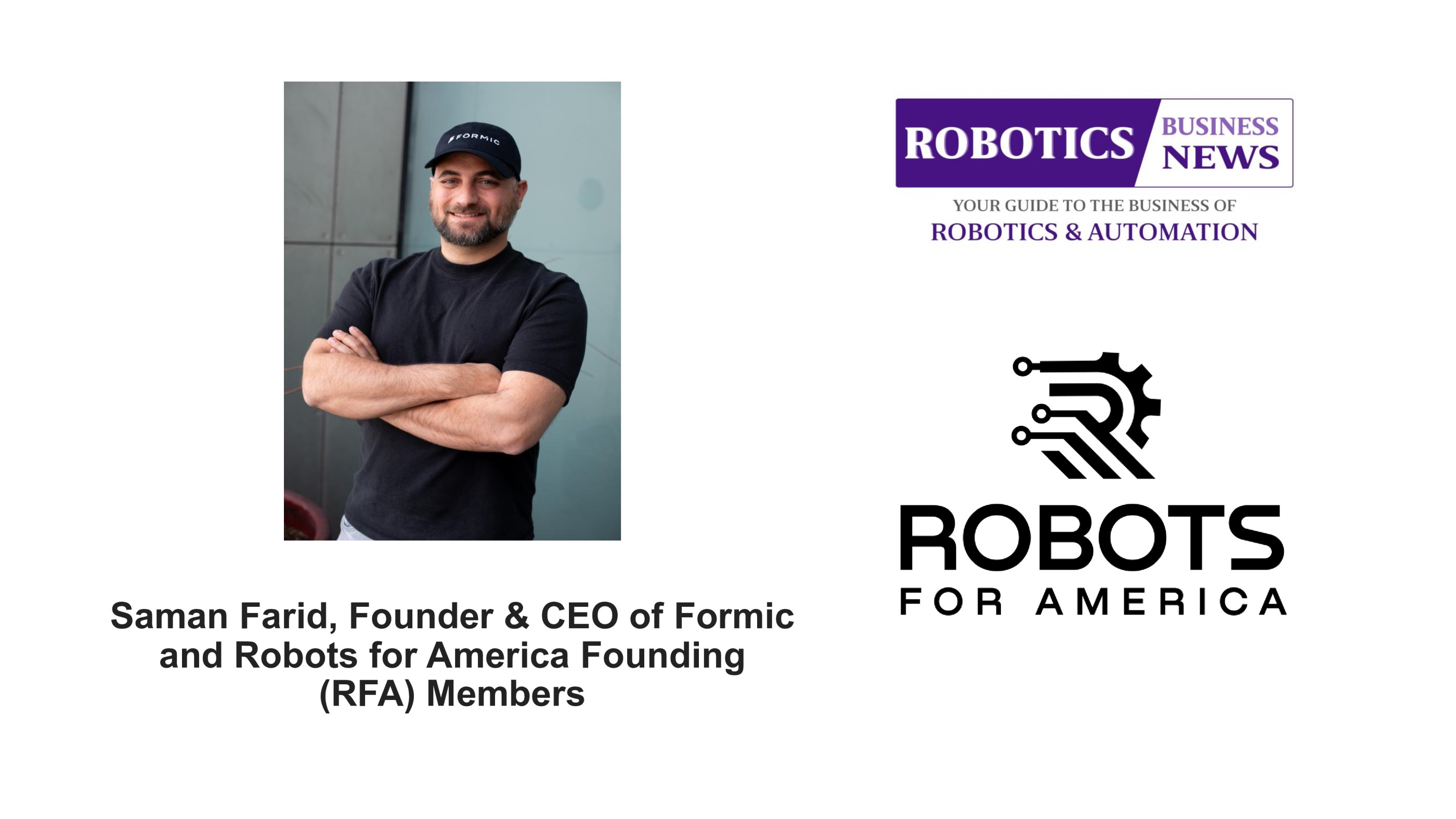
Formic Founder & CEO Saman Farid discusses why the U.S. robotics industry is organizing for the first time around a unified national policy agenda — and what must change to accelerate automation, workforce development, and industrial competitiveness.
As the United States faces growing pressure to compete with countries rapidly scaling robotics and physical AI, a new coalition of automation leaders is calling for coordinated national action. In this conversation with Robotics Business News, Saman Farid, Founder & CEO of Formic and a founding member of Robots for America, outlines the policy barriers slowing robotics deployment, the workforce challenges shaping adoption, and why automation must be treated as strategic infrastructure for America’s industrial future.
What specific policy barriers are currently slowing robotics deployment in the United States, and which reforms does the coalition view as most urgent?
The honest answer is that there is no single answer. It is a compounding stack of friction that, taken together, makes automation feel out of reach for the manufacturers who need it most.
Capital access is the first wall most small and mid-size manufacturers hit. Even when a manufacturer wants to automate, the upfront cost of acquiring, installing, and integrating automation is prohibitive without reliable financing structures built for this use case. Traditional lenders do not have the frameworks to underwrite automation investments the way they do equipment, and many manufacturers do not have the balance sheet to absorb a multi-year payback period. We are pushing for tax incentives that lower the financial risk of running robotic trial programs before full deployment, and for financing structures that treat automation the way we treat other strategic capital investments.
Tax treatment is the second barrier. Current federal depreciation rules do not reflect the pace at which robotics and physical AI technology evolves. If a manufacturer deploys a system that may need to be upgraded or reconfigured in three years, the incentives need to match that reality. We are advocating for modernized depreciation schedules and tax treatment that encourages adoption rather than penalizing it.
Regulatory friction is the third. Permitting and safety approval timelines for new robotic installations can add months to what should be a straightforward deployment process. This is especially acute in facilities that operate across multiple states or sectors with overlapping regulatory jurisdictions. Streamlining these processes, without compromising safety, would meaningfully accelerate adoption timelines.
Workforce is the fourth. There is a persistent misreading of what the workforce challenge looks like in manufacturing. The conversation fixates on displacement, but the more immediate problem is a shortage of technicians trained to operate, maintain, and troubleshoot automated systems. We need federal investment in robotics training programs at community colleges and trade schools, because right now the limiting factor in many deployments is not the robot, it is the person who can run it.
Finally, there are barriers specific to autonomous logistics. The movement of goods within and between facilities using autonomous mobile robots and similar systems. Outdated regulations governing where and how these systems can operate create unnecessary friction that slows one of the highest-value use cases in the industry.
Of these, we view financing access and workforce training as the most urgent near-term priorities, because they affect the broadest population of manufacturers and have the most direct line to more deployment.
The coalition was reportedly formed following requests from U.S. government officials seeking a unified robotics policy framework. Why has the industry lacked a coordinated national voice until now?
This involves both the structure of the industry and a problem of timing.
The robotics industry has historically been dominated by large industrial incumbents, who have had representation through broader manufacturing associations but little incentive to push aggressively for policies that accelerate adoption by new companies.
What changed is that a new generation of robotics companies emerged over the last decade, companies like those in our founding coalition, that were built specifically to make deployment accessible and scalable. Formic, Path Robotics, GrayMatter Robotics, Machina Labs, Chef Robotics, Standard Bots: these are companies deploying robots in hundreds of U.S. facilities right now. They represent a very different set of interests than the legacy players, and until recently, they were operating in parallel rather than together.
The other factor is that the policy urgency simply was not as acute until now. Physical AI has created an inflection point. What was theoretical even three years ago is now deployable on real factory floors. Policymakers began to notice the gap between what is technically possible and what is actually being deployed at scale and they started asking why. That is what prompted outreach from the Office of Science and Technology Policy, the Department of Commerce, the Small Business Administration, and members of the Senate. They wanted a practical industry response, not another position paper from a legacy trade group.
We formed RFA because the ask was specific: get organized, identify the barriers, and come back with a real framework. That is what we did.
Countries like China, Japan, and South Korea already operate under national robotics strategies. What lessons should the U.S. adopt — or avoid — from those international models?
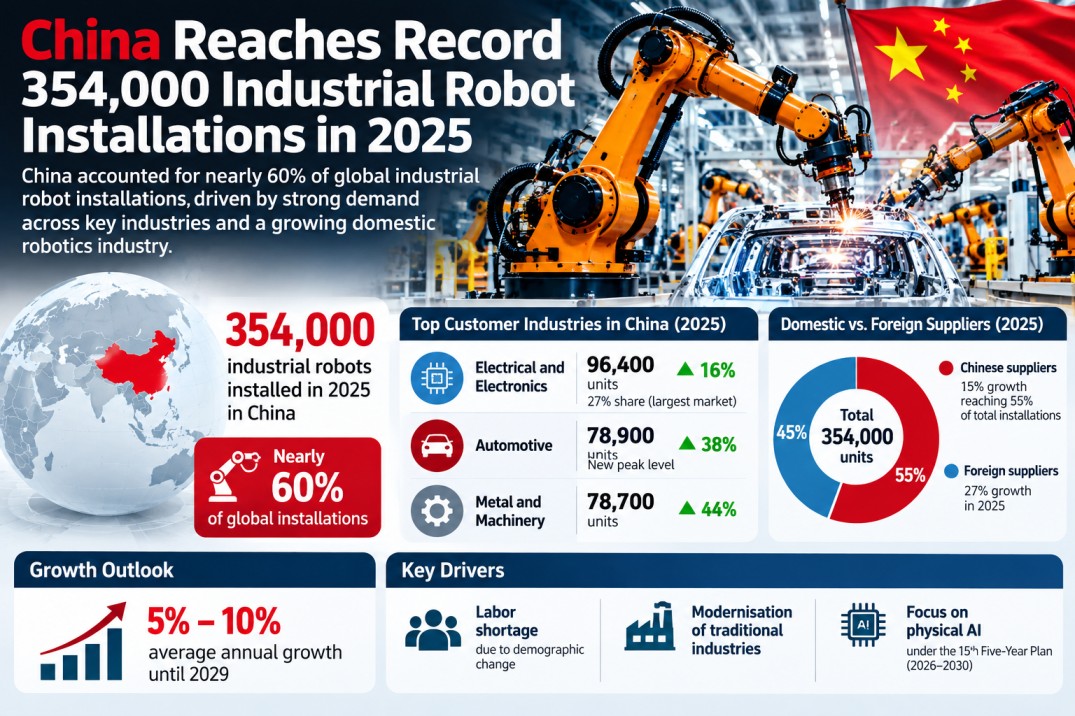
The lesson worth adopting from all three is coordination. China's "Made in China 2025" strategy, Japan's Society 5.0 framework, and South Korea's Intelligent Robot Act all share one feature: they treat robotics as strategic infrastructure and organize national resources around it. They have designated government bodies, dedicated funding streams, and explicit deployment targets. The U.S. has none of that. We have excellent research institutions, world-class companies, and enormous manufacturing capacity, but no coordinating mechanism that connects policy to deployment at scale. That is the gap RFA is trying to fill.
From Japan specifically, the lesson is about the relationship between robotics and the workforce. Japan faced a demographic crisis before almost anyone else (an aging population, a shrinking labor force), and responded by treating automation not as a threat to workers but as the mechanism for maintaining economic productivity. That framing has been enormously effective, and it is one we are trying to bring into the U.S. conversation.
From South Korea, the lesson is speed. Korea moved from strategy to statute to deployment faster than most observers expected, partly because the government was willing to make purchasing commitments that created market certainty for manufacturers and deployers. There is a version of that model that makes sense for the U.S., particularly in defense and public infrastructure, where the federal government is a large buyer.
What to avoid: the temptation to design a top-down industrial policy that picks winners, constrains competition, or moves so slowly through the legislative process that the technology has evolved past it before the ink is dry. China's approach involves significant state subsidies and market interventions that are not appropriate for the U.S. system and would face legitimate legal and competitive challenges. The U.S. model should be focused on removing barriers and creating incentive structures, not on directing which companies or technologies prevail.
The other thing to avoid is treating this as purely a manufacturing strategy. The countries that are getting this right understand that robotics is infrastructure… it underpins supply chains, logistics, healthcare, construction, and defense. The U.S. policy response needs to match that scope.
A major concern around automation is workforce displacement. How does Robots for America plan to frame robotics as a tool for strengthening American jobs rather than replacing them?
We are going to make this argument with data, not rhetoric, because the data actually supports it. The dominant narrative around automation and jobs has been shaped by a real fear: that robots will eliminate positions faster than the economy can create new ones.
But here is what the ground-level reality looks like in most of the facilities our members work in: the problem is not that manufacturers have too many workers and want robots to replace them. The problem is that manufacturers cannot find workers at all. Skilled labor shortages in American manufacturing have been structural for years and are getting worse. In many facilities, the choice is not between a human and a robot: it is between a robot and nothing, because the position cannot be filled. Automation in that context does not eliminate jobs. It preserves the facility's ability to operate, which preserves every other job in that facility.
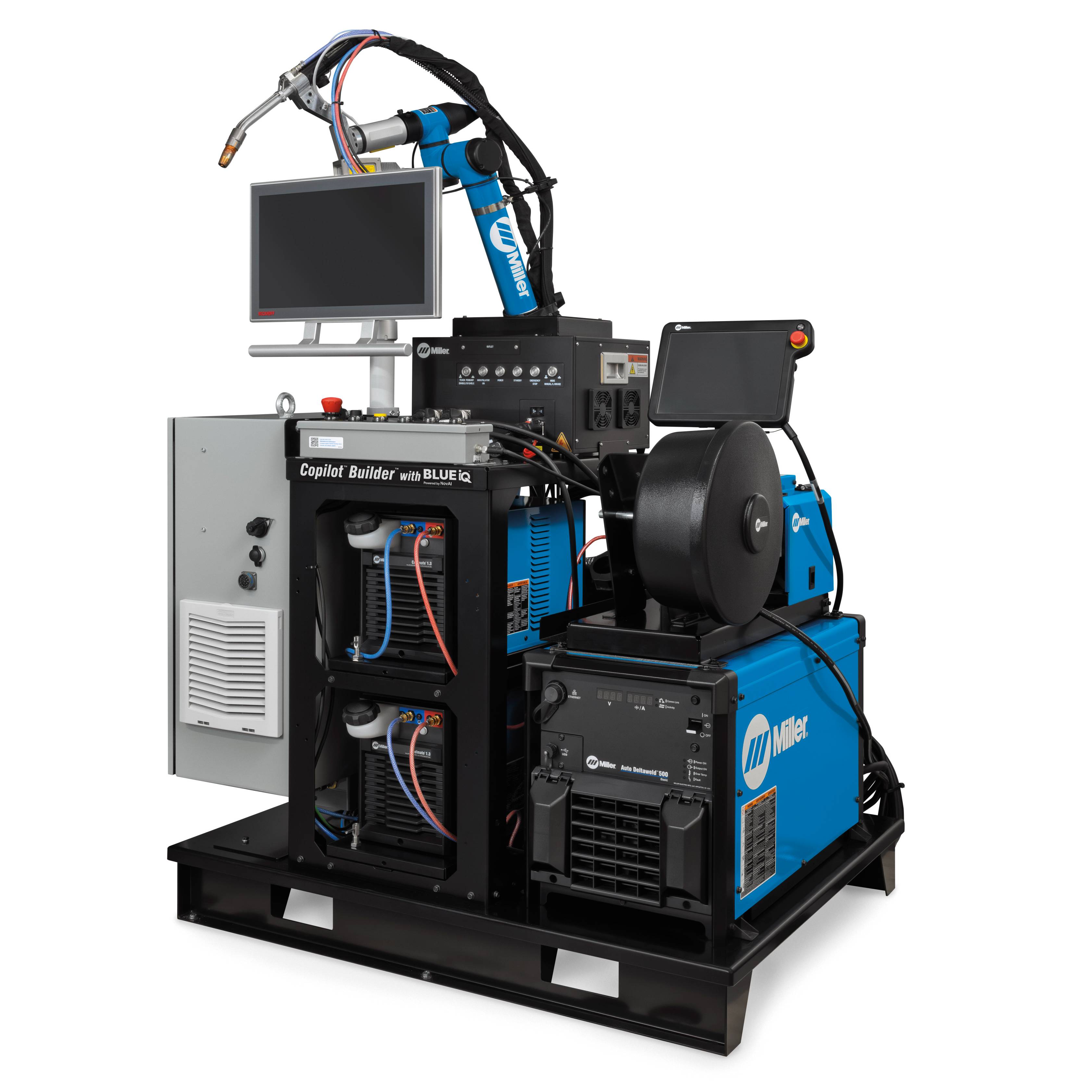
There is a second dimension to this that rarely gets covered: automation creates new jobs. Robotic systems need to be installed, maintained, calibrated, and improved. Those are skilled, well-paying, domestic jobs that cannot be offshored. A factory that deploys an autonomous welding system does not eliminate welding jobs: it creates robotics technician roles alongside whatever human welders remain for complex or judgment-intensive work. The skills are different, but the job count is often flat or growing.
The workforce pillar of our policy platform is specifically designed around this reality. We are advocating for federal investment in training programs at community colleges and trade schools that teach the skills needed to work alongside and support automated systems. We want to create a pipeline of workers who see automation as an opportunity, not a threat, and that requires concrete investment in re-skilling and up-skilling, not just reassurances.
RFA is also building a public narrative function specifically to document and share case studies from the factory floor. We want the public conversation to be grounded in what is actually happening, not hypotheticals. When we can show a mid-size manufacturer in Ohio that deployed robots, maintained its workforce, increased output, and created new technical roles, that story does more than any policy paper. Stay tune for this first case study, rooted in real data.
The coalition includes robotics firms, AI companies, and manufacturers. How do you align the priorities of startups, industrial operators, policymakers, and labor stakeholders under one agenda?
We align around outcomes, not interests. The outcomes everyone in this coalition shares are: more automation deployed in U.S. facilities, more manufacturing capacity onshored, a stronger industrial base, and a workforce that can operate and benefit from these systems. Those are not controversial goals.
For startups and growth-stage robotics companies, the priority is market access and reduced friction in the sales and deployment cycle. They want shorter permitting timelines, clearer standards, and financing structures that help their customers afford to buy. For large industrial operators, the priority is often workforce: they need trained technicians, and they need policy certainty before making large capital commitments. For policymakers, the priority is constituent outcomes: jobs, domestic production, supply chain resilience, and national security. For labor stakeholders, the priority is worker protection and economic opportunity.
When you map those interests, the overlap is larger than it might appear. Everyone benefits from a clearer regulatory environment. Everyone benefits from workforce investment. Everyone benefits from financing structures that accelerate deployment.
Our structure is designed for this. We have steering committees across policy, technology, narrative, and operations. Members with the deepest expertise on a given issue lead the work in that area. Manufacturing members, the operators, not just the vendors, have representation, because they often have the most direct insight into what barriers actually feel like from the inside.
We also made a deliberate decision to anchor the coalition in practitioners: companies and organizations with real, on-the-ground experience deploying systems in U.S. facilities today. That shared foundation makes disagreements more productive, because everyone at the table has skin in the game and real-world data to bring.
Robotics adoption in the U.S. has historically lagged behind advances in AI software. Why has deployment become the central challenge rather than invention itself?
This is one of the most important questions in the industry right now, and it does not get enough attention.
The U.S. does not have an invention problem. We have some of the best robotics research institutions in the world. Our universities, national labs, and private R&D programs consistently produce breakthrough capabilities. The country that gave the world ROS, Boston Dynamics, and the modern industrial cobot is not struggling to innovate.
What we have is a deployment gap: a structural failure to translate technical capability into widespread adoption on the factory floor. And the reasons for that gap are not technical. They are financial, operational, and regulatory.
Software can be deployed at near-zero marginal cost. You build it once and distribute it infinitely. Physical systems are the opposite. Every robot has to be physically installed, integrated with a specific facility's layout and workflow, calibrated, and maintained. That is expensive, time-consuming, and requires skilled people on-site. The economics of deployment are fundamentally different from the economics of software, and the policy environment was designed around neither.
There is also a risk dynamic that does not exist in software. If a software deployment fails, you roll it back. If a robotic system is installed and underperforms, you have a capital asset that is not delivering the expected return, change management challenges with your workforce, and a sunk cost that affects your next investment decision. That risk profile makes manufacturers cautious in ways that software buyers are not, and it has created a market where many manufacturers are interested in automation but unwilling to commit without seeing it work in a facility like theirs.
That is precisely why one of our policy priorities is funding for trial programs. The fastest way to accelerate deployment is to reduce the cost and risk of testing before committing. Once a manufacturer sees a system working in their own facility, the adoption decision becomes much simpler.
The other dimension here is systems integration. Even when the robots themselves are excellent, integrating them into an existing facility (connecting them to existing software systems, workflows, safety infrastructure, and supply chains) is genuinely hard. That integration capability is in short supply, and building it out is a workforce and standards challenge as much as a technology challenge.
Many experts now describe robotics and physical AI as strategic infrastructure tied to economic competitiveness and national security. Do you believe the U.S. is treating robotics with sufficient urgency today?
Not yet. There is real attention being paid to this issue at the highest levels of government. The outreach that led to RFA's formation came from serious people at serious agencies, OSTP, Commerce, the SBA, the Senate, who understand the stakes. The executive conversations around industrial policy, reshoring, and supply chain resilience are more substantive than they have been in a generation. That is encouraging.
But attention and urgency are different things. Urgency means resources, timelines, and accountability. It means treating the deployment gap the way you would treat a gap in semiconductor capacity or shipbuilding: as a strategic deficit that demands coordinated federal action, not just good intentions.
What we have today is a policy environment that is still largely reactive: responding to specific requests from specific industries, building initiatives at the margins, without a comprehensive framework that says: this is what U.S. robotics leadership looks like in ten years, these are the metrics we are tracking, and these are the federal actions required to get there. That framework does not exist yet. Building it is a significant part of what RFA is here to do.
If Robots for America succeeds over the next five years, what measurable changes would demonstrate that the U.S. has regained leadership in industrial robotics and automation?
I think about this in terms of four categories of outcomes: deployment, workforce, policy, and industrial capacity.
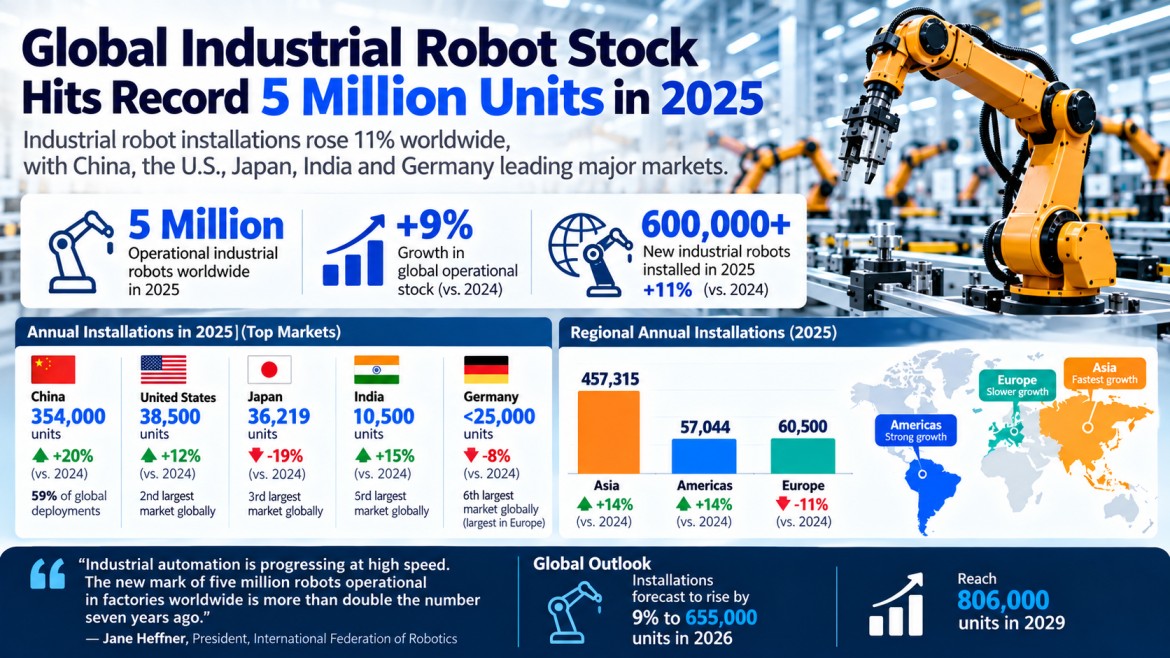
On deployment: the U.S. is significantly behind the leading economies in robot density, or the number of robots per 10,000 manufacturing workers. South Korea, Singapore, Germany, China, and Japan all far outpace us. Success would mean a meaningful, measurable increase in that metric, with particular emphasis on mid-market manufacturers (the backbone of American production) rather than just the largest industrial operators. If the gains are concentrated in Fortune 500 companies and the small and medium manufacturers are still sitting it out, we have not moved the needle where it matters most.
On workforce: success means a visible pipeline of trained robotics technicians coming out of community colleges and trade schools across the country. It means the story has shifted from "robots are taking jobs" to "robotics jobs cannot be filled fast enough." This is the trajectory we are already seeing in facilities that have deployed automation thoughtfully. But let’s industrialize that.
On policy: success means that within three years, the federal government has a recognized, coordinated robotics policy framework. Not a one-time executive order, but a standing mechanism that connects the work of OSTP, Commerce, the SBA, and relevant agencies around a shared set of deployment objectives. It means the tax code has been updated to reflect the realities of physical AI investment cycles. It means permitting timelines for robotic installations have been streamlined. These are concrete, measurable policy outcomes.
On industrial capacity: success means that the U.S. is producing and deploying more of its own automation technology, and that the hardware and systems being installed in American factories are increasingly built here. That is a supply chain resilience argument as much as an economic one.
The headline metric, or the one that tells the whole story, is whether small and mid-size U.S. manufacturers are deploying automation at a rate that makes them globally competitive. Not just the large ones or the high-tech sectors. The full backbone of American industry. That is what we are here to build.