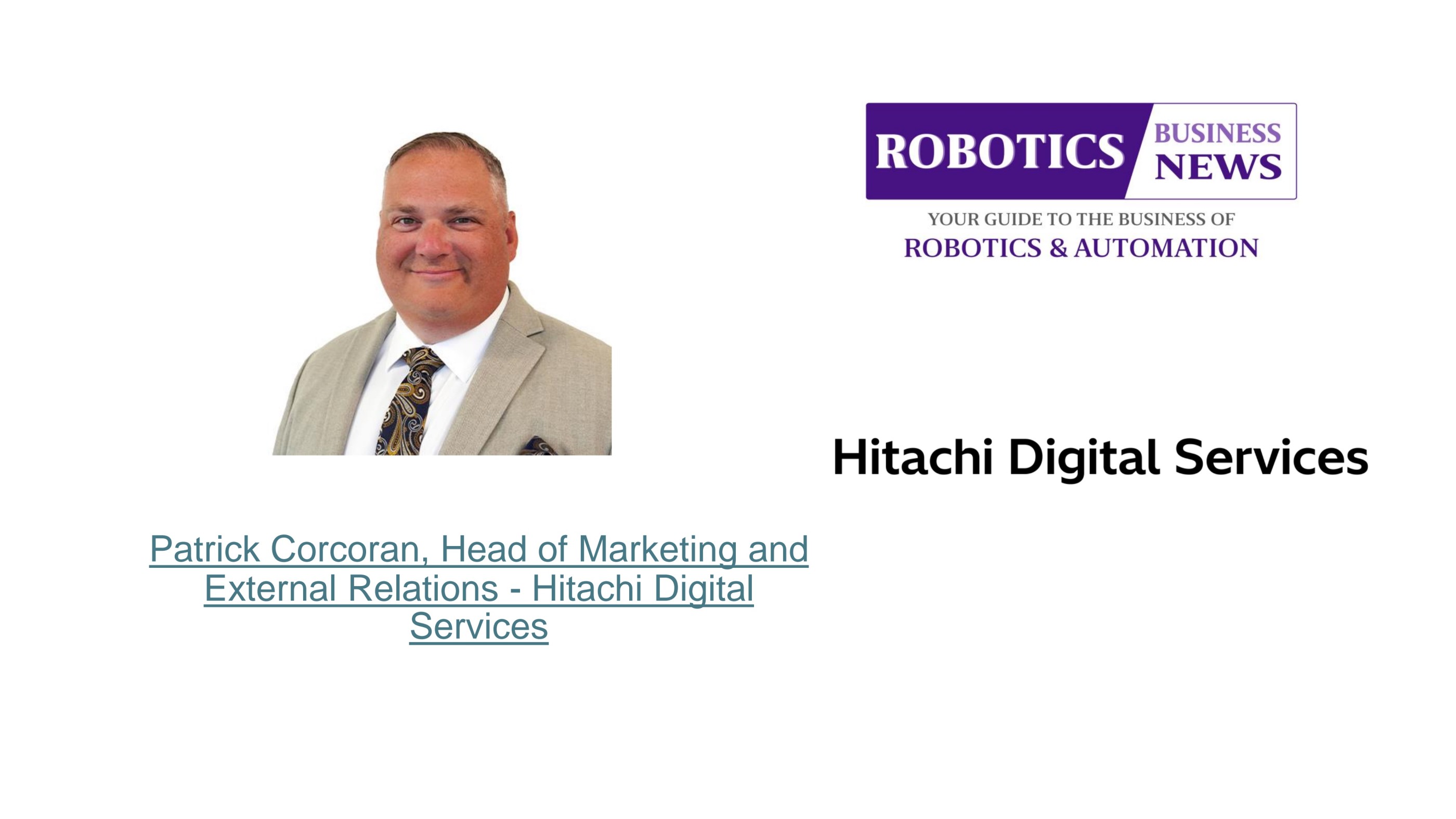
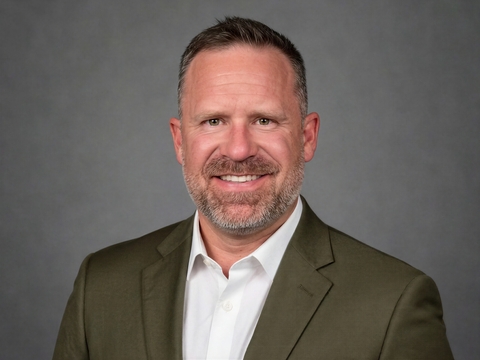
Patrick Corcoran of Hitachi Digital Services: “Physical AI Is About Creating Smarter Operations, Not Smarter Chatbots”
05 June 2026 | Interaction | By Editor Robotics Business NEWS <editor@rbnpress.com>
In an exclusive conversation with Robotics Business News, Patrick Corcoran discusses how physical AI, intelligent robotics, edge intelligence, and responsible AI governance are transforming manufacturing, energy, rail, and industrial operations, while helping enterprises move from AI experimentation to real-world execution.
As physical AI reshapes the industrial landscape, organizations are looking beyond digital assistants toward intelligent systems that can operate, learn, and make decisions in the physical world. In this exclusive Robotics Business News interview, Patrick Corcoran, Head of Marketing and External Relations at Hitachi Digital Services, discusses why manufacturing is poised for rapid transformation, how edge intelligence is redefining enterprise operations, and why trust, governance, and human-machine collaboration will determine the success of the next generation of AI-powered industries.
Hitachi Digital Services was recognized as the only company named a Leader across all three ISG categories. What differentiates your approach to intelligent robotics and physical AI from other global providers?
Most companies are talking about AI. We're focused on what happens when AI leaves the screen and enters the real world.
What makes Hitachi different is that we've spent more than a century operating in industries where failure is not an option. Trains have to run. Power has to stay on. Factories have to produce. We bring together that industrial heritage with modern AI and digital engineering capabilities to help organizations move from experimentation to execution.
Physical AI isn't about creating smarter chatbots. It's about creating smarter operations.
The report highlights your strength in mission-critical industries like rail, energy, mobility, and manufacturing. Which industry do you believe will see the fastest transformation from physical AI over the next five years, and why?
For decades, manufacturers have been pursuing automation. Physical AI changes the game because machines can now observe, learn, adapt, and make decisions in ways that simply weren't possible before.
We're entering an era where factories become living systems that continuously optimize themselves. The organizations that embrace that shift will gain a significant advantage. The ones that don't may find themselves competing against businesses that are operating at an entirely different speed.
How does Hitachi combine operational technology expertise with AI and robotics to deliver real-world business outcomes rather than just experimental deployments?
The simple answer is that we start with the business problem, not the technology.
Too many AI conversations begin with the question, "Where can we use AI?" We start by asking, "What outcome are we trying to achieve?"
Whether that's improving safety, increasing productivity, reducing downtime, or creating a better customer experience, technology is only valuable if it moves the needle on something that matters. Our role is to help clients bridge the gap between possibility and measurable business impact.
The announcement references Hitachi's "customer zero" philosophy. Can you share a real example where internal adoption helped shape a customer-facing robotics or AI solution?
One of the principles we believe strongly in is that you should never ask customers to go somewhere you're unwilling to go yourself.
Before we take new capabilities to market, we challenge ourselves to use them inside our own business. That gives us a much deeper understanding of what's possible, what works, and where the real obstacles are.
The result is that our customers benefit not just from our technology, but from our experience.
Physical AI and autonomous systems raise growing concerns around governance, safety, and reliability. How is Hitachi ensuring responsible AI deployment in high-stakes industrial environments?
The biggest risk in AI today isn't moving too slowly. It's moving too fast without the right guardrails.
As AI becomes more embedded in physical operations, trust becomes a competitive advantage. Organizations need confidence that these systems are transparent, reliable, secure, and accountable.
We've made responsible AI a foundational principle because in the industries we serve, trust is not optional. It's essential.
Hitachi mentioned integrating edge intelligence, robotics, and AI-driven decision layers through platforms like Lumada and NVIDIA-powered AI factories. How do you see edge AI changing enterprise operations in the coming years?
We're moving from a world where people react to problems to a world where systems anticipate them.
The closer intelligence gets to the point where work actually happens, the more valuable it becomes. Whether it's a factory floor, a rail network, or an energy grid, decisions increasingly need to happen in real time.
The next generation of enterprises won't simply be connected. They'll be aware.
Many enterprises are still struggling to move from AI pilots to scaled implementation. What advice would you give business leaders trying to operationalize robotics and physical AI successfully?
Stop thinking about AI projects and start thinking about business transformation.
The companies creating the most value from AI aren't necessarily the ones investing the most money. They're the ones willing to rethink how work gets done.
Technology is rarely the biggest obstacle. Culture, leadership, and organizational inertia usually are. The winners will be the organizations that move beyond experimentation and make AI part of how they operate every day.
Looking ahead, what does the future of human-machine collaboration look like at Hitachi Digital Services, and how should organizations prepare their workforce for an AI-native future?
The future isn't human versus machine. It's human plus machine.
The most successful organizations won't be the ones with the fewest people. They'll be the ones that enable their people to accomplish far more than was previously possible.
We're entering a period where every employee will have access to capabilities that once required entire teams. That changes how organizations compete, how leaders lead, and how careers develop.
The companies preparing their workforce for that future today will define the next generation of industry leaders.