ForwardX Robotics White Paper Highlights Four Keys to Successful Brownfield Automation
ForwardX Robotics outlines how systems engineering, adaptable autonomy, secure deployment and large-scale fleet coordination can help manufacturers automate existing facilities.
Image Courtesy: Public Domain
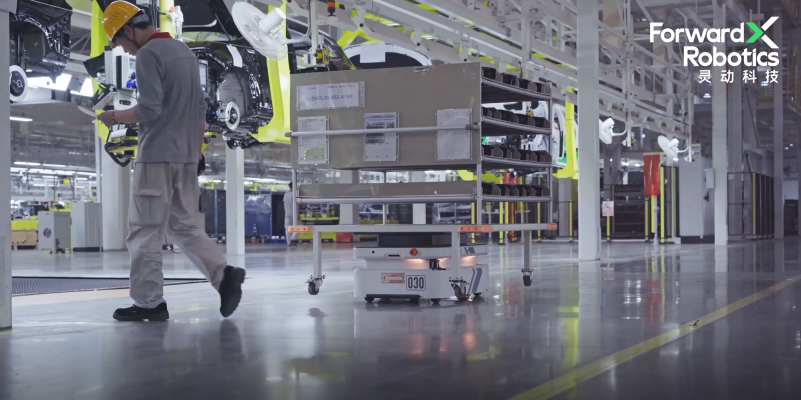
As manufacturers are increasingly focused on automating their existing facilities, autonomous mobile robots (AMRs) can improve internal material flow without requiring major infrastructure changes. However, abandoned industrial site environments present challenges beyond robot movement. Current layouts, traffic patterns, material flows, IT infrastructure, and ongoing production must all be considered.
For manufacturers, the goal is not simply to deploy more robots; it is about integrating automation into existing operations while maintaining safety, flexibility, a reliable flow of materials, and long-term scalability as production requirements evolve.
The new white paper titled Brownfield Automation Whitepaper from ForwardX Robotics on the automation of existing facilities identifies four fundamental capabilities for the success of this task.
1. Systems engineering for legacy installations
Successful automation begins with understanding the factory as a comprehensive production system. Material flows are interconnected with production requirements, equipment utilization, inventory movements, traffic, and IT systems. ForwardX combines material flow analysis, production constraints, traffic engineering, IT/OT integration, and implementation planning before introducing automation. This methodology has been developed through five large-scale implementations at automotive original equipment manufacturers (OEMs), involving more than 100 RMAs.
2. Adaptability in engineering
Every legacy industrial facility has different floor conditions, aisle widths, traffic patterns, material handling systems, network infrastructure, and production layouts. Therefore, automation should be tailored to the facility, rather than requiring costly standardization. ForwardX uses vision-based autonomy, enabling automated guided vehicles (AGMs) to navigate without floor markings or magnetic guidance. At Chery Dalian, more than 480 AGMs operate alongside hundreds of manually driven forklifts, thanks to perception systems, dynamic obstacle avoidance, and coordinated traffic management.
3. Secure implementation in a production environment
In a functioning factory, the implementation methodology can be just as important as the automation technology itself. ForwardX uses a phased implementation, digital validation, integration testing, controlled transition to production, and progressive commissioning. Software interfaces and communication with MES, WMS, ERP, and other factory systems are verified before the robots enter actual production, reducing implementation risk and ensuring production continuity.
4. Large-scale fleet coordination
To scale from a pilot RMA project to hundreds of these robots requires coordinated fleet intelligence. At Chery Dalian, 484 RMAs operate in a manufacturing plant using ForwardX's unified fleet management platform. The f(x) Fleet Manager enables dynamic task allocation, traffic management, loader optimization, and real-time fleet visibility across different robot architectures.
The white paper is a technical report demonstrating that automating legacy facilities requires more than just autonomous robots. Manufacturers must assess whether an automation solution can understand existing operations, adapt to facility constraints, be deployed safely, and coordinate large-scale fleets. These capabilities provide a practical framework for manufacturers looking to evaluate automation through RMA in existing production environments.