Robot-Assisted Knee Replacement Linked to Better One-Year Patient Outcomes in New Study
A study of 845 patients found better knee function, pain, and activity outcomes following robot-assisted knee replacement compared with conventional surgery.
Image Courtesy: Public Domain
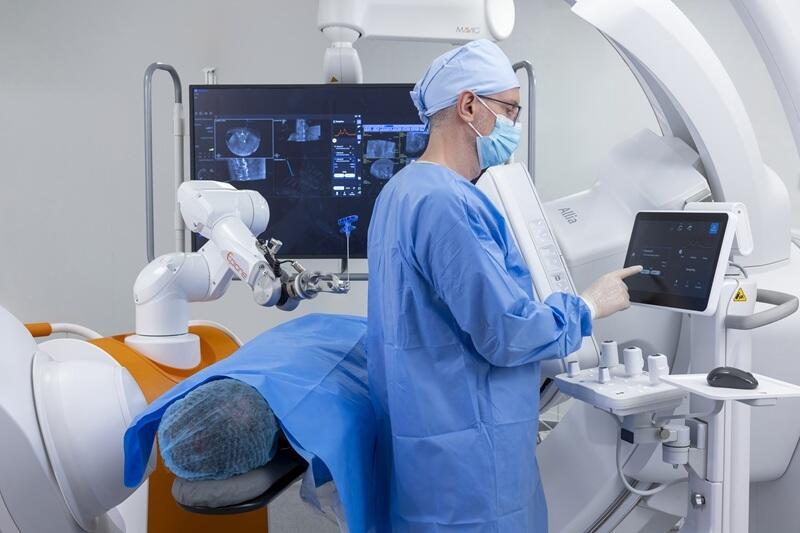
Robot-assisted knee replacement surgery was associated with better patient-reported outcomes one year after surgery than conventional knee replacement in a new study published on 3 November in the Journal of Orthopaedics and Traumatology. Medicana Health Group says the findings highlight growing interest in individualised surgical planning, while emphasising that treatment decisions must be tailored to each patient.
The quasi-randomised trial examined 845 patients who underwent total knee replacement between 2022 and 2025 at a German centre. Of these, 390 received robot-assisted surgery and 455 underwent conventional surgery. At one-year follow-up, the robot-assisted group reported better results across measures of knee function, pain and activity. Both groups received the same implant model, allowing researchers to examine differences associated with the surgical approaches.
Professor Bilal Demir, an orthopaedics and traumatology specialist at Medicana Zincirlikuyu Hospital in Istanbul, said the findings reflect a broader shift toward planning joint replacement around individual anatomy and functional needs.
“Successful knee replacement is not simply about placing an implant. The position of the components, ligament balance, the patient’s anatomy and a realistic rehabilitation plan all influence how the knee feels and functions afterwards,” said Professor Demir. “Research into robotic assistance is valuable because it helps us understand how more precise and personalised planning may contribute to better outcomes.”
Knee replacement is commonly considered for patients with advanced joint damage when pain and limited mobility substantially affect daily life and non-surgical treatments no longer provide sufficient relief. Surgical choices depend on several factors, including the severity of arthritis, bone structure, overall health and patient expectations.
“Patients should not assume that the newest technology is automatically the best choice for everyone,” Professor Demir added. “The priority is to select the appropriate technique for the individual, explain the likely benefits and limitations, and support recovery with carefully planned rehabilitation.”
The researchers noted that their findings need to be interpreted in the context of the study design. Allocation was based on surgeon assignment rather than conventional randomisation, and the comparison was conducted at a single centre. Longer-term studies are needed to establish whether early differences translate into durable advantages in implant survival, revision rates and everyday mobility.
For Medicana, the study offers an opportunity to emphasise the importance of evidence-based, patient-centred orthopaedic care, from assessment and surgical planning through postoperative physiotherapy. Professor Demir’s clinical interests include major-joint reconstruction, limb deformity correction and complex extremity surgery.