Reliable Robotics Completes FAA-Backed Detect-and-Avoid Flight Tests to Advance Autonomous Aviation
Collaboration with Federal Aviation Administration and industry partners validates DAA system performance in complex airport environments, accelerating UAS integration into national airspace
Image Courtesy: Public Domain
Reliable Robotics, the leader in autonomous aircraft systems, announced the completion of a contract with the Federal Aviation Administration (FAA) under the Broad Agency Announcement (BAA) program to execute Detect and Avoid (DAA) data collection flights in and around airport environments. For large uncrewed aircraft systems (UAS) to integrate into the National Airspace System, they will be expected to maintain safety and efficiency in all classes of airspace, including the terminal area and in the traffic pattern. This test campaign provided validation data to the FAA as it finalizes certification standards for DAA systems and to standardization bodies as they continue to evolve technical standards. Testing was completed in collaboration with Virginia Tech’s Mid Atlantic Aviation Partnership (MAAP) and with support from integration partners Sagetech, Collins and uAvionix.
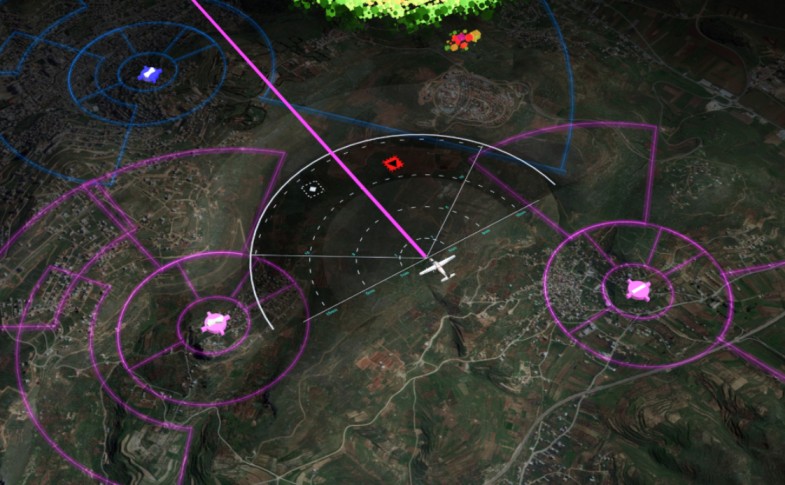
Reliable’s DAA system is designed to facilitate a remote pilot’s responsibility to perform both Remain Well Clear and Collision Avoidance functions against all airborne traffic. Its comprehensive DAA system is based on Airborne Collision Avoidance System X (ACAS X), the FAA-developed algorithm which improves upon the existing Traffic Alert and Collision Avoidance System II (TCAS II) equipped in most transport-category aircraft. ACAS X versions include ACAS Xu for autonomous fixed-wing aircraft, among others.
The FAA-contracted flight testing evaluated the threshold and boundaries between en route and terminal environments around airports and assessed the ability of Reliable’s DAA system and ACAS X to provide alerts and maneuvering guidance for remote pilots in these environments. Reliable collected and shared data from flight tests to substantiate UAS DAA standards currently in development with the FAA.
“Demonstrating the ability of UAS to integrate into airport environments with a VFR traffic pattern is necessary for building a scalable aviation autonomy solution. The data Reliable captured through this testing under the FAA is nearly impossible to generate in a lab environment, and is tremendously useful in the development of relevant and useful standards,” said Brandon Suarez, Vice President, UAS Integration, Reliable Robotics. “Through this testing, we’ve been able to confirm several key aspects of the technical standards that the FAA is leveraging for UAS.”
A key finding from the flight test included the distinction between en route and terminal environments for DAA. Behavior and output of the ACAS X algorithm changed between en route and terminal airspaces, confirming an important adjustment that pilots under Instrument Flight Rules (IFR) make to interoperate with Visual Flight Rules (VFR) aircraft. Continuing to provide collision protection against both cooperative and noncooperative traffic at low altitudes during takeoff and landing will ensure safety in and around airport environments.
To complete the contract, Reliable conducted extensive Hardware In The Loop testing of its system and a flight test campaign including scripted “encounters” in and around the terminal area at the public Hollister Municipal Airport in California (KCVH).
“Real-world testing advances the substantiation of standards that we rely on to build DAA solutions that keep our skies safe. With the growth of uncrewed aircraft systems in the market, we value the opportunity to contribute to the development of DAA standards,” added Matthew Hamilton, Chief Technology Officer, Sagetech.
Reliable partnered with vendors to complete the flight testing campaign, including Sagetech for its prototype ACAS X hardware, Collins for its prototype ground-based radar, and uAvionix for its prototype Skylink C-Band communication equipment. The data collected from this flight test campaign has been shared with RTCA Special Committee 228 (SC-228) and Special Committee 147 (SC-147) to inform the validation of the next set of standards for advanced DAA systems.