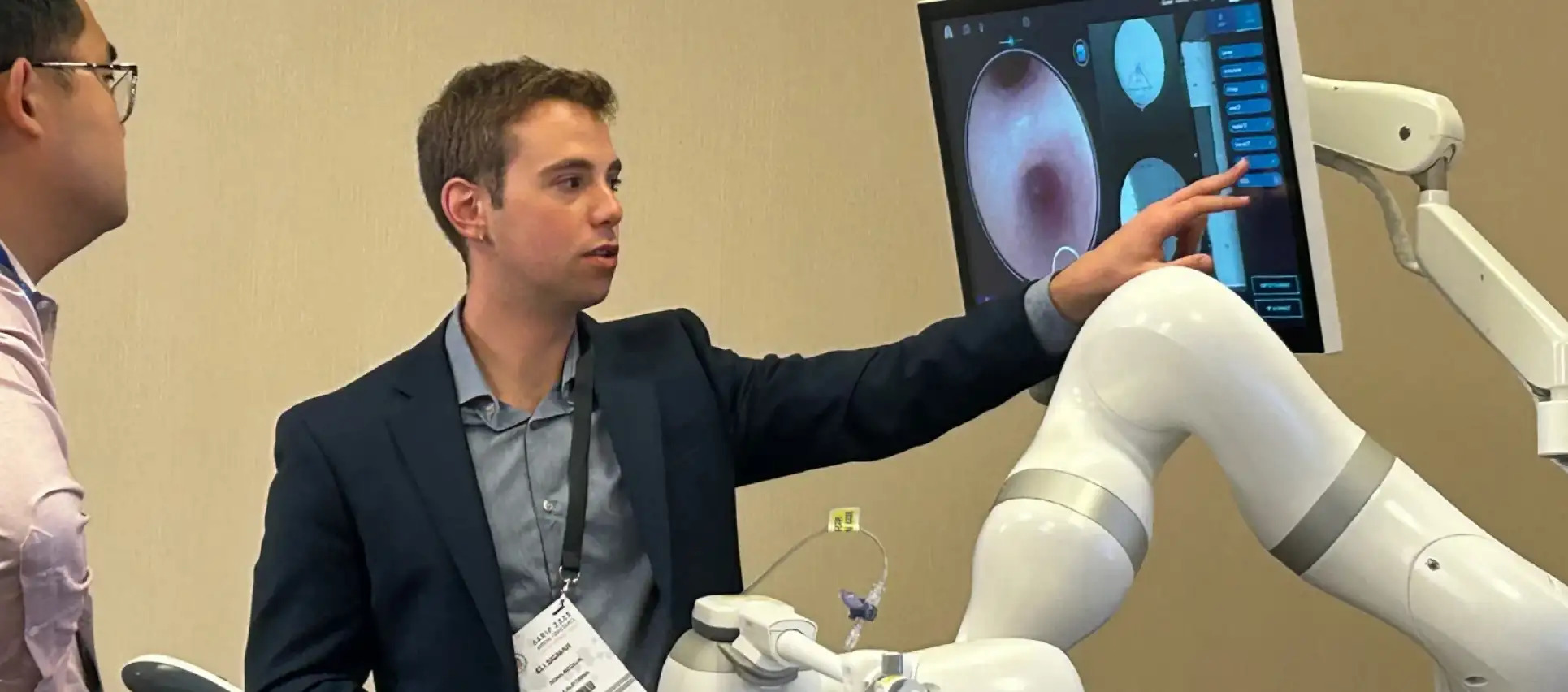
Neptune Medical, a company creating the future of endoscopy, announced positive results from the 50-patient, first-in-human CARE 1 study (Colonoscopy with a Robotic Endoscope) of its Triton Robotic Endoscopy system. The Triton system met both of its primary endpoints, with no adverse events and 100% cecal intubation enabling predictably complete procedures throughout the colon. The robotic system also demonstrated a high adenoma detection rate (ADR) and a highly favorable ergonomic environment for endoscopists. The study results were presented today by Jason B. Samarasena, MD, Chief of Division of Gastroenterology and Hepatology, University of California, Irvine and an investigator in the CARE 1 study, in a late‑breaking oral presentation at Digestive Disease Week® (DDW) 2026.
Colorectal cancer is the second leading cause of cancer death in the U.S. and increasingly affects adults under age 50. As the primary mode of detection, colonoscopy is considered the gold standard as it is the only procedure that allows for both detection and removal of precancerous lesions in one session. However, today’s manual endoscopes have inherent design limitations that can make them difficult to control based on an operator’s skill level. Scope instability can lead to incomplete procedures, missed adenomas (pre-cancerous lesions) leading to cancer development, significant endoscopist injuries due to the ergonomic strain of controlling the scope, and a steep learning curve for important, but complex, procedures.
With this in mind, the CARE 1 study was initiated as a prospective, single‑arm, first‑in‑human study of 50 adults followed for 14 days post-procedure who underwent screening, surveillance, or diagnostic colonoscopy with the Triton robotic system at a single European center, H-T Centrum Medyczne, Tychy, Poland. The study evaluated the safety and feasibility of the Triton system to successfully perform colonoscopy in adult patients, with both safety and efficacy endpoints.
Key CARE 1 Findings
- 0% adverse events after 14-day follow-up
- 100% cecal intubation and procedure completion
- 0% patient repositioning, abdominal pressure, or conversion to manual colonoscopy
- 54.2% adenoma detection rate (ADR)
- 67.5% polyp detection rate (PDR)
- 100% polypectomy success rate (of polyps <2 cm in size anywhere in the colon)
- 67% lower average burden compared to manual colonoscopy, based on NASA-TLX score
“In this first‑in‑human study, we used the Triton robotic system to safely complete colonoscopies in 50 adult patients. The Triton system demonstrated excellent safety and feasibility with 100% cecal intubation and no adverse events after 14-day follow-up,” said Marcin Romanczyk, MD, gastroenterologist at H‑T Centrum Medyczne and CARE 1 Principal Investigator. “Using Triton as a first-time operator was a very comfortable experience for me, with minimal physical and mental burden throughout the trial. A robotic endoscopy system that enables screening and treatment anywhere in the colon with maximum control would elevate our skills and support our diagnostic and therapeutic goals.”
“Triton’s exceptional control and stability allowed for a thorough mucosal inspection enabling precise polyp and adenoma detection, and ultimately, successful removal of all lesions, regardless of tortuosity or location,” said Dr. Samarasena. “These early promising results suggest that Triton may enable us to perform a large number of high-quality colonoscopies in a day with minimal fatigue, empowering us to respond to increasing colonoscopy demands in the United States.”
“Colon cancer is growing in prevalence, and concerningly, it is increasing the fastest in younger people. Yet, the colonoscope hasn’t changed much in the last 50 years,” said Alex Tilson, Founder and CEO of Neptune Medical. “GIs and their patients need better tools for navigation, inspection, detection and treatment. That is why we are driven by the singular mission of leading a robotic revolution in endoscopy to empower GIs and elevate the colonoscopy procedure.”