Dextall Launches Robotic Facade Fabrication System for High-Rise Prefab Construction
The AI-powered prefabricated facade company introduces a precision robotic welding platform delivering faster, standardized, and scalable production for major high-rise projects across New York City.
Image Courtesy: Public Domain
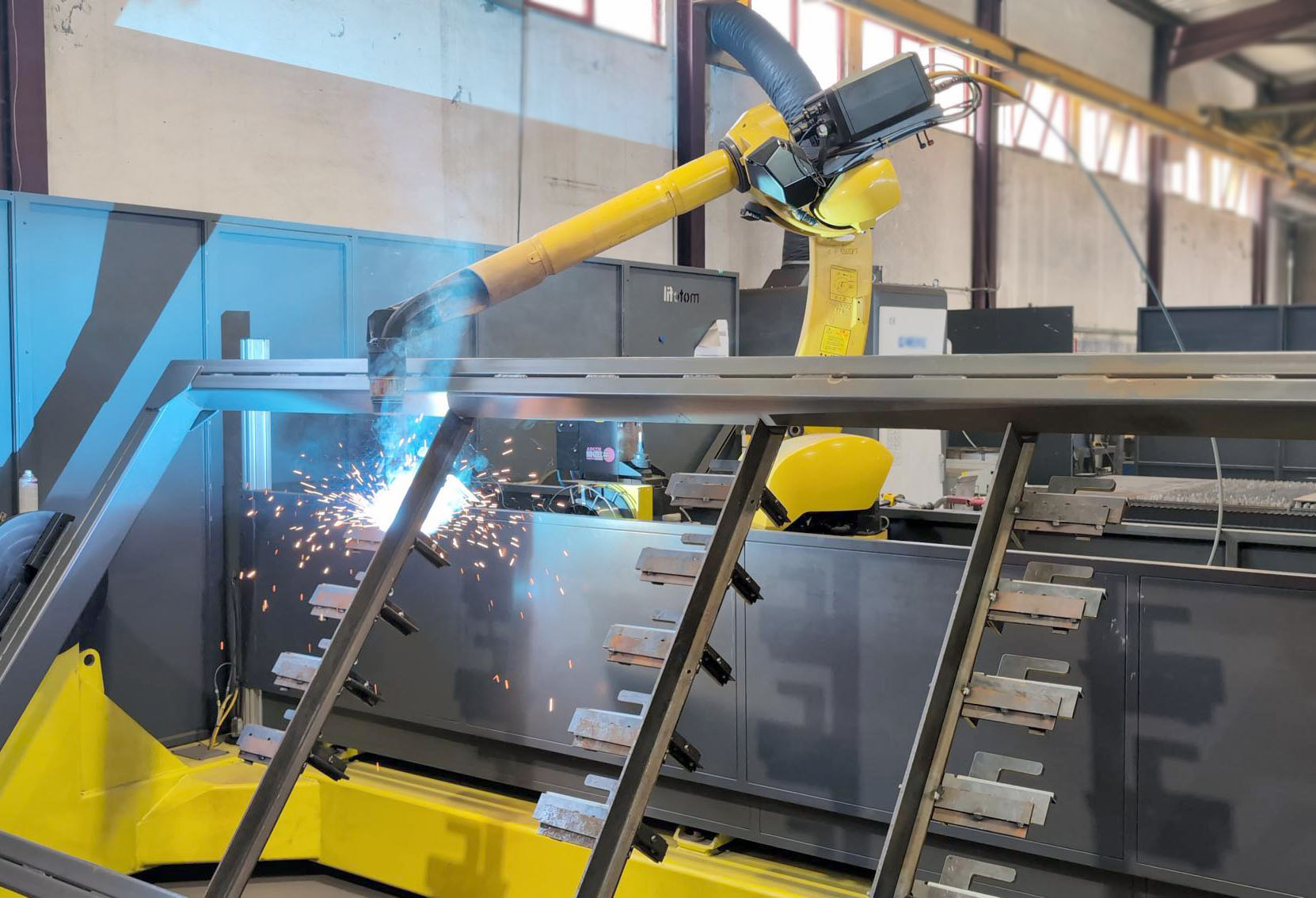
Dextall, the AI-powered prefabricated facade company behind active high-rise projects across New York City, announces the launch of its proprietary robotic facade fabrication system, a precision robotic welding platform built for the manufacture of custom prefab wall structural components at high-rise construction scale. The system is currently active in Dextall’s manufacturing operations and producing components for projects with Turner Construction, Suffolk Construction, SOM (Skidmore, Owings and Merrill), SLCE Architects, Aufgang Architects, and L&M Development.
The announcement formalizes a capability that Dextall has developed and operated internally for several years. Its $210 million project backlog demonstrates the system’s performance well beyond prototype or pilot stage. This is production infrastructure running at commercial scale.
Precision at Production Scale
At the core of the system is a precision robotic welding arm that produces the structural steel hook: the connector element that anchors each prefabricated facade panel to a building’s superstructure during installation. The hook is a high-repetition component. Every panel in every project requires one.
The robotic system delivers:
- 3x the speed of manual welding
- Identical welds on every component, every time
- Elimination of the inconsistency that manual welding introduces at production volume
“The machine does not get tired. It does not have a bad weld on a Friday afternoon. When the component is stable, the output is stable, every time, at any volume.”
— Aurimas Sabulis, Founder and CEO, Dextall
The Methodology: Standardize Before Automating
The more consequential part of the story is what happened before the robot arrived. The structural hook, historically produced in five configurations to serve slightly different structural scenarios, was standardized to a single configuration engineered to the most demanding specification in the family. For most applications, this means mild structural over-engineering. The hook carries more load capacity than the job strictly requires. The tradeoff was accepted deliberately.
- The consequences were immediate and compounding:
- Programming for the robotic system became simple and repeatable
- Setup variation between production runs was eliminated
- Purchasing leverage on raw material increased by a factor of approximately five
- Payback period dropped to under four years over a fifteen-year equipment service life
“Automation is not a strategy. It is a reward for having built something stable enough to automate. You earn the right to run a robot. You do not buy it.”
— Aurimas Sabulis, Founder and CEO, Dextall
Scaling Across the Full Component Library
Dextall is now applying the same methodology across its full component library: standardize to concentrate volume, then automate. The sequence is non-negotiable. Repeatable tasks first, standardization second, automation third. Assembly, the most complex and least standardized step in the production workflow, remains at the end of that roadmap, not the beginning.
A Market Defined by Labor Shortages and Performance Mandates
The announcement comes as the global construction robotics market is projected to nearly double between 2024 and 2029, driven by acute skilled labor shortages, rising material costs, and tightening building performance mandates. In New York City, Local Law 97 is accelerating demand for facade systems that meet stringent thermal specifications at competitive cost. Dextall entered that market with revenue, contracts, and a validated system. The robotic fabrication launch formalizes the manufacturing layer of that story.