Trossen Robotics and Stereolabs Advance Physical AI With Integrated Vision Platforms
Trossen Workbench and RIVET integrate Stereolabs ZED X cameras for synchronized, training-ready robot learning data.
Image Courtesy: Public Domain
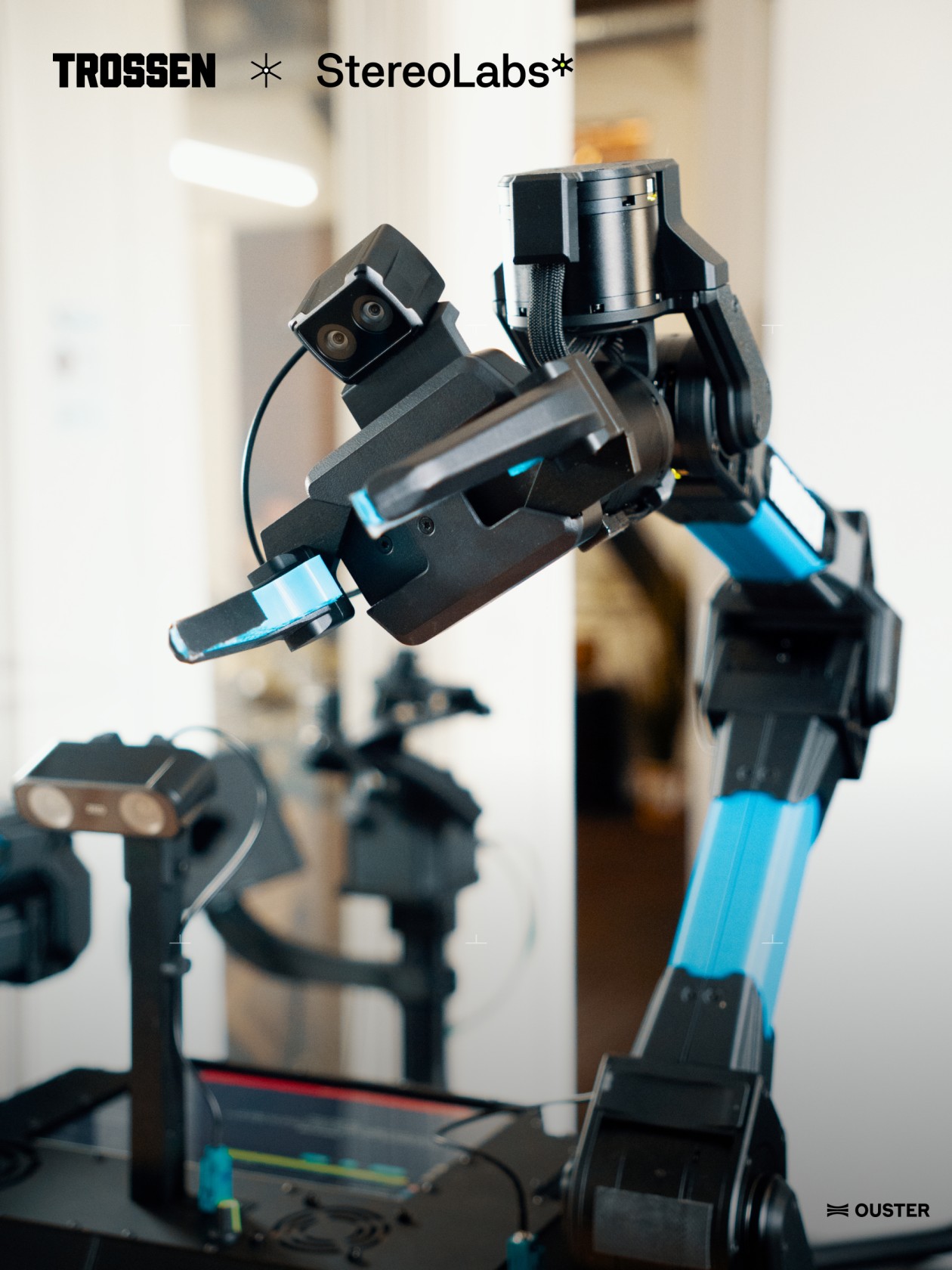
Trossen Robotics, a provider of research and data-collection platforms for Physical AI, and Stereolabs SAS, a wholly owned subsidiary of Ouster, Inc. (Nasdaq: OUST), and maker of the ZED series of AI stereo cameras, announced a collaboration that integrates Stereolabs' ZED X Mini and ZED X Nano cameras into Trossen's new Physical AI hardware suite for robot learning. The suite is headlined by the Trossen Workbench and Rivet, its stationary and mobile bimanual manipulation platforms.
Physical AI models are only as good as the demonstration data they are trained on and most of that data is visual. Today, teams typically assemble their own rigs from individually sourced robot arms and consumer-grade USB cameras, relying on custom driver code to connect them. The result is datasets with low-resolution imagery, inconsistent calibration, motion blur, and timing drift across views and data streams.
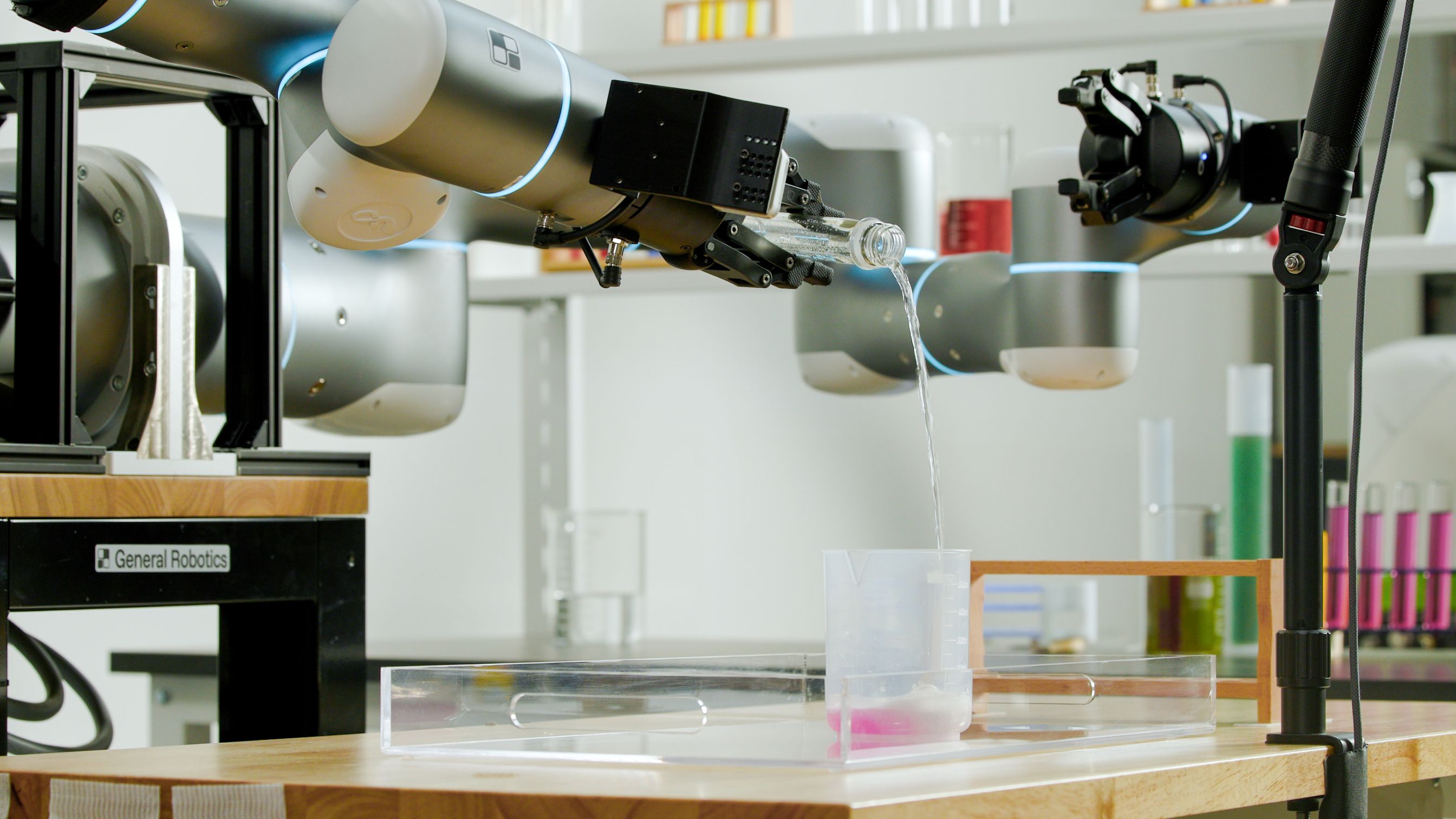
The Trossen Workbench and Rivet are unified development platforms featuring dual WidowX Pro 6-DoF arms with reach from 700 mm to 1000 mm, payload capacities of 4 to 6 kg payload, and 1 mm repeatability. Each platform is powered by an onboard NVIDIA Jetson AGX Orin 64 GB compute and supports teleoperation over local networks and the internet. Each also includes a factory-calibrated three-camera vision system built entirely with Stereolabs hardware.
The Stereolabs and Trossen joint vision architecture mirrors how state-of-the-art manipulation policies are trained. A center-mounted Stereolabs ZED X Mini provides the global scene view and stereo-depth context of the full workspace, while each wrist-mounted ZED X Nano delivers the close-range view of the gripper and object that imitation-learning policies rely on for fine manipulation.
The ZED X Nano was designed specifically for this application. Its dual 2.3 MP (1920×1200) global-shutter sensors capture at up to 60 fps without the motion blur of rolling-shutter USB cameras, and its neural depth engine resolves geometry from as close as 3 cm, the distances at which grasping actually happens. GMSL2 connectivity with locking, EMI-resistant cabling keeps all three cameras deterministically synchronized on the Jetson with a zero-copy pipeline, so teams can record, encode, and run inference simultaneously without frames silently dropping mid-episode. A vibration-resistant onboard IMU keeps the wrist views usable even as the arms move at speed.
Every teleoperated episode collected on the Workbench and Rivet is a clean, synchronized, multi-view, RGB-plus-depth training sample, ready for imitation learning, reinforcement learning, and sim-to-real workflows through native support for ROS 2 and NVIDIA Isaac Sim / Isaac Lab.
“The Physical AI community is migrating to GMSL2 because USB can't handle the long cable runs from the end effector to compute that real robots demand,” said Matt Trossen, CEO from Trossen Robotics. “Stereolabs ZED X Nano gives us the signal stability, image quality, and throughput to take Physical AI from the lab into hardened industrial deployments. Teams should spend their time collecting demonstrations and training policies, not integrating and calibrating camera rigs.”
“Trossen has done what few others have: put the camera at the heart of a complete, calibrated data-collection system,” said Cecile Schmollgruber, President of Stereolabs. “The Workbench with Stereolabs ZED X Mini and ZED X Nano turns every demonstration into training-grade data, and that's what will move Physical AI forward.”
The Workbench anchors Trossen's broader Physical AI hardware suite including the RIVET mobile manipulation platform, GLIDE passive leader arms, and COCKPIT operator station for scalable teleoperated data collection. The suite will be shown publicly at Trossen's Physical AI Residency in San Francisco, August 12–28, 2026, alongside live data-collection and policy-evaluation demos at Trossen’s booth at the Actuate conference also in San Francisco, August 18-19, 2026.