Japan’s Industrial Giants Join NVIDIA Push to Advance Physical AI Manufacturing
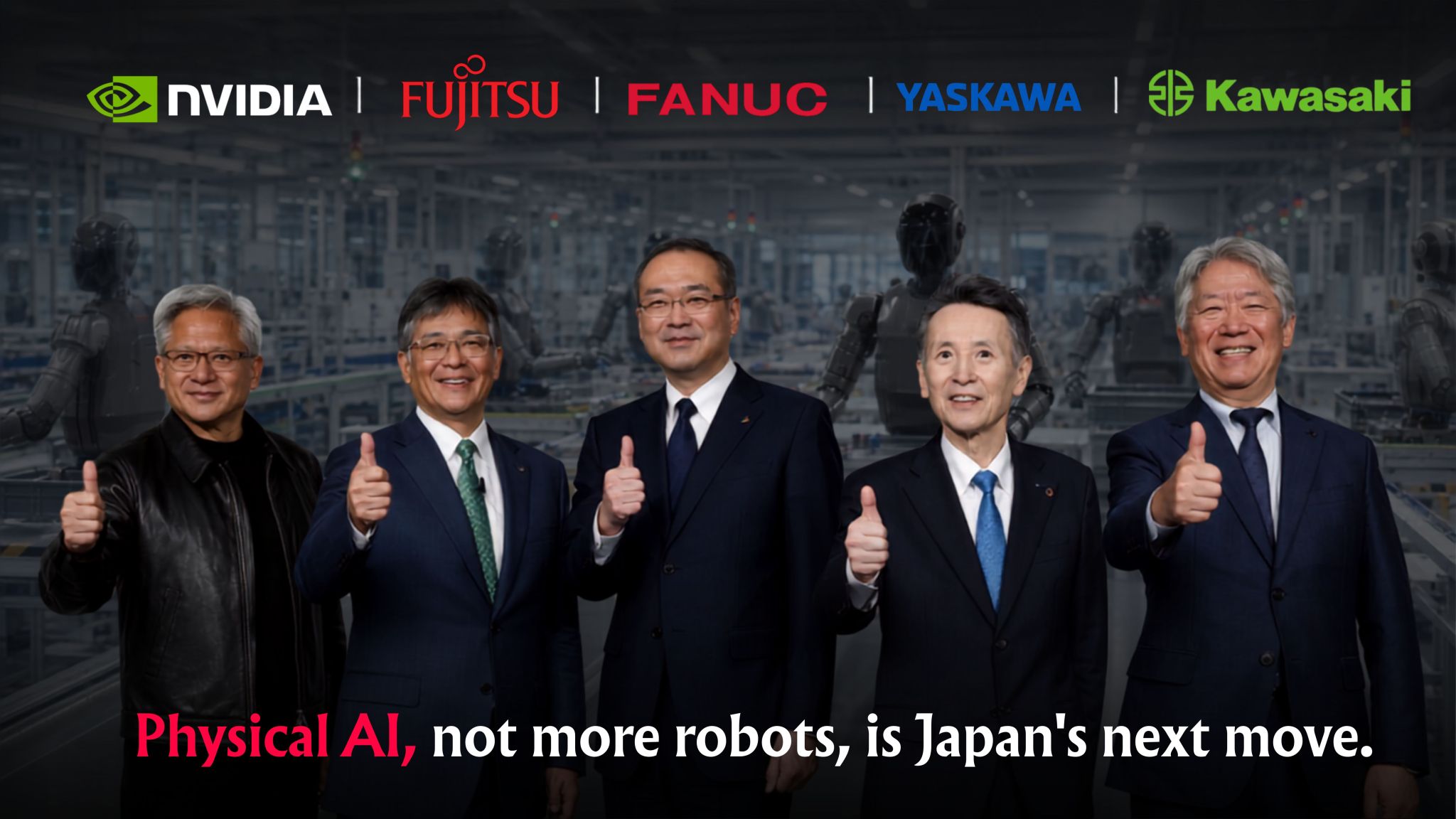
FANUC, Yaskawa, Kawasaki Heavy Industries and Fujitsu combine robotics and AI technologies with NVIDIA to accelerate intelligent manufacturing.
Japan’s industrial technology leaders are stepping up efforts in Physical AI, combining the country’s established strengths in robotics and advanced manufacturing with NVIDIA’s artificial intelligence, accelerated computing and simulation technologies.
FANUC, Yaskawa Electric, Kawasaki Heavy Industries and Fujitsu are among the major Japanese companies working with NVIDIA technologies to advance AI-powered industrial systems. The initiatives demonstrate how manufacturers are moving beyond conventional automation toward robots capable of perceiving, learning and adapting to changing production environments.
The collaborations bring together expertise spanning industrial robots, factory automation, computing, artificial intelligence, digital twins and simulation.
Bringing Physical AI to the Factory Floor
Traditional industrial robots have transformed manufacturing by performing repetitive tasks with high speed and precision. However, most systems continue to depend heavily on predefined programming and structured operating environments.
Physical AI could change this model by enabling machines to understand and interact more intelligently with the physical world.
Using AI models, machine vision, simulation and accelerated computing, future robotic systems could recognize objects and changing conditions, make decisions and adjust their movements in real time.
For manufacturers, these capabilities could help address persistent challenges including labor shortages, production variability, quality control and growing demand for flexible manufacturing.
Japan’s Robotics Leaders Expand AI Capabilities
FANUC, one of Japan’s leading industrial automation and robotics companies, is exploring how AI can enhance industrial robot intelligence and simplify automation deployment.
Yaskawa, known globally for its Motoman industrial robots and motion-control technologies, is similarly positioned to combine advanced robotics with AI-driven automation.
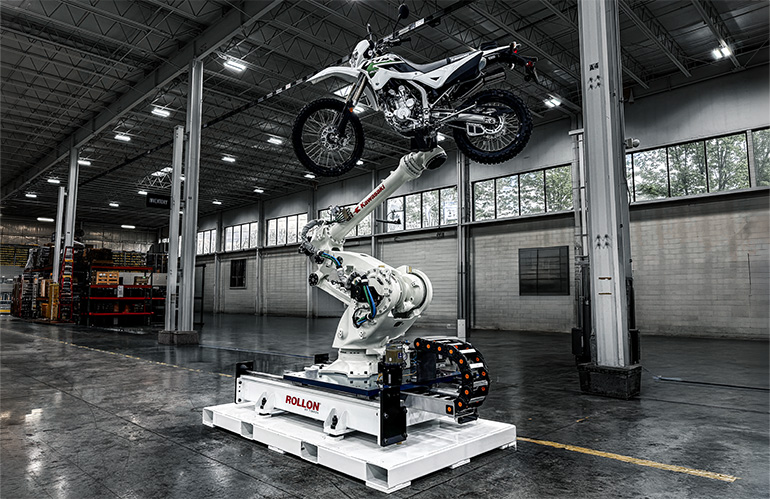
Kawasaki Heavy Industries brings decades of industrial robotics and manufacturing expertise. Greater integration of AI perception and decision-making could allow its robotic systems to operate in increasingly complex and less structured environments.
Fujitsu adds another important layer through its capabilities in enterprise AI, computing and digital infrastructure. Connecting industrial systems with AI and digital twins could allow manufacturers to optimize production processes virtually before implementing changes on factory floors.
NVIDIA Provides the Physical AI Foundation
NVIDIA has increasingly positioned Physical AI as a major area of growth for robotics and industrial automation.
Its ecosystem combines accelerated computing with technologies for robotics development, AI models, simulation and digital twins. Virtual environments can allow developers to train and validate robotic systems before deploying them on physical machines.
This simulation-first approach could reduce development time while allowing manufacturers to test significantly more operating scenarios than would be practical on production equipment.
Digital twins can also reproduce factories and production systems virtually, enabling companies to evaluate workflows, robot movements and potential manufacturing changes without interrupting active operations.
From Programmed Robots to Adaptive Machines
The broader shift toward Physical AI represents an important evolution for industrial robotics.
Rather than executing identical programmed movements indefinitely, AI-enabled robots could eventually interpret their environments and respond dynamically to production conditions.
Such systems could identify manufacturing abnormalities, adapt to product variations, support automated quality inspection and collaborate more effectively with human workers.
These capabilities are becoming increasingly important as manufacturers seek greater productivity while facing workforce shortages and pressure to produce more customized products.
Japan already holds a strong position in global robotics, electronics and precision manufacturing. Combining that industrial foundation with advanced AI could provide the country with another significant opportunity as intelligent machines become more widely deployed.
The growing alignment between FANUC, Yaskawa, Kawasaki Heavy Industries, Fujitsu and NVIDIA technologies signals how Physical AI is moving closer to real-world industrial deployment.
For manufacturers, the potential outcome is a new generation of factories where robots are not simply programmed to repeat tasks but can increasingly perceive, reason and adapt to the physical world around them.