Philips-Led SHERPA Project Launches Seven Clinical Studies to Advance AI- and Robotics-Assisted Interventions
Backed by €21.5 million in EU and industry funding, the SHERPA consortium validates AI-driven workflows for brain aneurysm and tumor treatments across leading European hospitals.
Image Courtesy: Public Domain
- With a total budget of EUR 21.5 million, the four-year SHERPA research project is coordinated by Philips and co-funded by the EU Innovative Health Initiative (IHI) and industry partners
- The project focuses on developing automated workflows for minimally invasive neurovascular and tumor treatments – clinical procedures where staffing levels and specialized expertise are in short supply
- The clinical studies are being conducted at University Medical Center Utrecht, St Antonius Hospital, University Medical Center Hamburg-Eppendorf, Hôpital Bicêtre AP-HP, and Hospital de la Santa Creu i Sant Pau
- On March 4 (16:30 - 17:30 CET), SHERPA will be featured at the European Congress of Radiology 2026 in a dedicated session
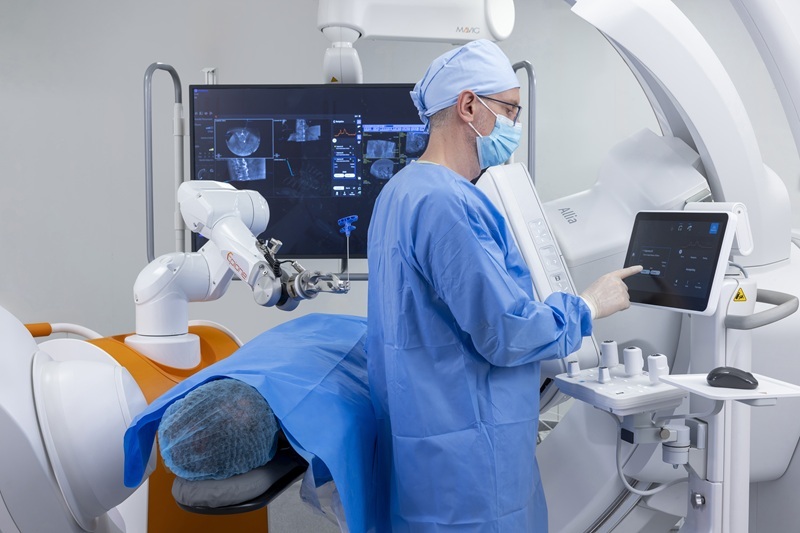
Royal Philips (NYSE: PHG, AEX: PHIA), a global leader in health technology, today announced that the Philips-coordinated SHERPA research consortium has initiated seven clinical studies to demonstrate the benefits of AI- and robotics-assisted workflows in minimally invasive treatments for brain aneurysms* and liver tumors. Staff shortages, coupled with the complex nature of the work, place significant pressure on interventional radiologists and interventional neuroradiologists who perform these procedures. The SHERPA consortium aims to validate AI-powered technologies in imaging, data visualization, procedure planning and guidance, clinical decision support, and patient pathway orchestration. These technologies are designed to automate repetitive, time-consuming tasks, support decision-making, and accelerate learning to ease the workload of interventional (neuro)radiologists.
The four-year research project is co-funded by the industry partners through in-kind contributions and additional resources, as well as by the European Union Innovative Health Initiative (IHI), and comprises 16 partners from seven European countries.
“Over the past year, the SHERPA project has brought together a talented team of researchers who have developed a technology framework designed to make workflow automation a reliable companion – a ‘sherpa’ – for interventional (neuro)radiologists as they navigate some of their most complex procedures,” said Bert van Meurs, Chief Business Leader, Image Guided Therapy, at Royal Philips. “By providing a template for the future adoption of AI-enabled assistive technologies and accelerating the associated learning curve, this framework will help address the increased demand for interventional (neuro)radiologists in Europe and beyond.”
“Demand for image-guided, minimally invasive procedures has outpaced the growth of the specialized workforce,” said Irene van der Schaaf, Professor Neurovascular Interventional Radiology, UMC Utrecht. “At the same time, procedures are becoming more complex and technology is advancing rapidly, making it harder for teams to keep pace. In interventional radiology, technology and human touch go hand in hand. Physicians must manage highly technical tasks – sometimes away from the patient – while continuing to provide personal care and reassurance. The SHERPA project aims to develop AI-enabled tools that simplify routine tasks, enhance patient care, and support the training of the next generation of interventional (neuro)radiologists.”
On March 4, 2026, from 16:30 to 17:30 CET, SHERPA will be featured at the European Congress of Radiology (ECR) 2026 in a dedicated session titled: “Assistive Technologies for Interventional Radiologists: Enhancing Decision-Making and Streamlining Workflow with Innovations and AI-Powered Solutions.” Click here to view the agenda and register to attend the session online.
Innovation through public-private partnership
The SHERPA public-private partnership consortium comprises five medical technology industry partners, five academic partners, and five research organization and medical association partners:
- Industry partners: Philips, Medtronic, Sim&Cure, Interventional Systems, Barco.
- Academic partners: University Medical Center Utrecht (The Netherlands), University Medical Center Hamburg-Eppendorf (Germany), Hôpital Bicêtre AP-HP (France), Hospital de la Santa Creu i Sant Pau (Spain), St Antonius Hospital (The Netherlands).
- Research organization and medical association partners: European Institute for Biomedical Imaging Research - EIBIR, Cardiovascular and Interventional Radiological Society of Europe – CIRSE, European Society of Minimally Invasive Neurological Therapy – ESMINT, Eindhoven University of Technology – TU/e (The Netherlands), Human-Factors-Consult – HFC (Germany).
Addressing staff shortages and patient access by relieving the pressure on physicians
The World Health Organization (WHO) predicts a shortage of 600 thousand physicians in the European Union (EU) by 2030 [1]. Some of the most acute physician shortages are in interventional radiology, even in countries such as the UK that have advanced healthcare systems [2].
Among the many different procedures conducted by interventional (neuro)radiologists, treatments of brain aneurysms and liver tumors are some of the most complex and time consuming. Both rely on CT and/or MR imaging for diagnosis, real-time imaging for procedure guidance, and a high level of precision in the placement of therapeutic devices such as blood-clot inducing platinum coils to seal off a brain aneurysm or the percutaneous insertion of ablation needles to treat a liver tumor. As a result, these procedures require a very high level of operator expertise and training, which can limit patient access.
The SHERPA project aims to provide interventionists with AI-powered assistive technologies that automate repetitive tasks and support decision-making across the entire workflow. By doing so, they will accelerate learning curves and improve precision and safety in complex minimally invasive interventions such as brain aneurysm repair and liver tumor ablation.
During the first year of the project, the consortium successfully developed AI algorithms to help identify brain aneurysms that need treatment and algorithms to optimize patient selection and therapy planning for liver tumor ablation. They also developed robotic technology to improve procedure precision and reduce difficulty, and AI software to confirm treatment success. These have now been integrated into orchestrated end-to-end workflows for both types of procedure.
SHERPA project clinical studies
Over the next three years of the four-year SHERPA project, the consortium partners will conduct a series of clinical studies to refine these assistive technologies and assess the benefits in terms of the patient experience, workload optimization, interventionist satisfaction, and performance.
The five brain aneurysm studies will focus on AI-driven aneurysm detection, risk prediction, and precise treatment planning:
- RADAR: AI-based aneurysm detection based on CT and MR imaging.
- Aneurysm@risk: AI-based algorithm to predict aneurysm growth and rupture risk.
- ASSIST: AI-supported device selection and positioning guidance.
- INTERACT: Automatic collimation and projection angle suggestions to optimize imaging for procedural guidance.
- SAFO: Evaluation of a digital remote follow-up solution for brain aneurysm patients, enabling standardized monitoring, enhanced coordination, and seamless care across the patient pathway.
The liver and lung tumor studies will leverage advanced imaging and robotic-assisted biopsy technologies, respectively, to drive greater diagnostic precision and procedural efficiency.
- MISTRAL: Evaluation of new Cone Beam CT workflows to optimize imaging for percutaneous liver ablations.
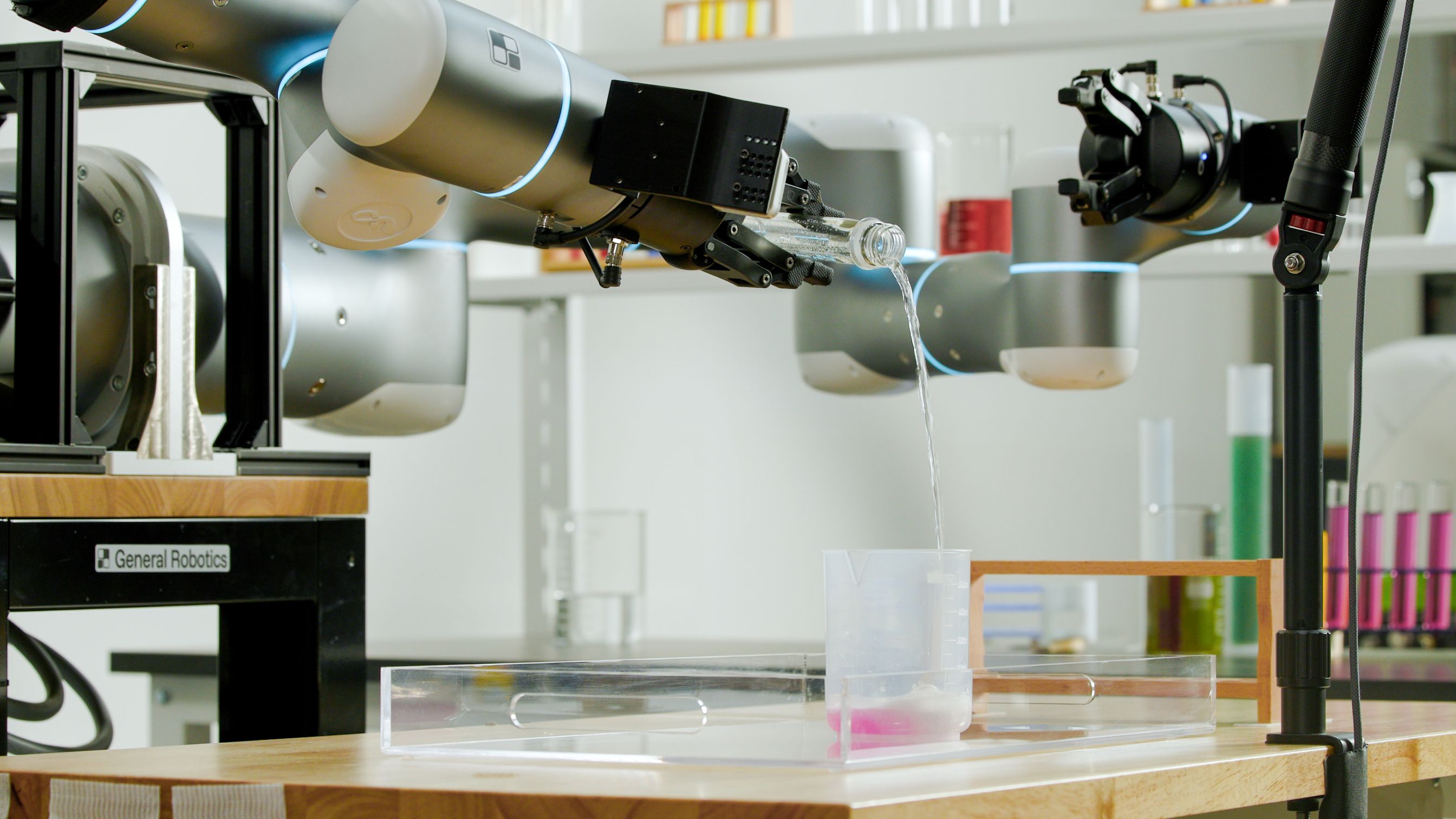
- RHODES: Evaluation of robotic-assisted versus free-hand lung biopsies with a focus on operability and device efficiency.
Together, these studies will generate insights to support the acceptance and adoption of AI-based smart assistive technologies by the wider interventional radiology community.