Europe’s Robotics Industry Builds Strength Beyond Robot Manufacturers
04 October 2026 | Report | By Editor Robotics Business NEWS <editor@rbnpress.com>
Europe may not lead the world in robotics scale, but its deep industrial supply chain, engineering expertise and growing Physical AI ecosystem remain significant advantages.
Europe is developing a distinctive position in the global robotics industry, combining established automation companies with a new generation of startups working on humanoids, Physical AI, autonomous systems and intelligent manipulation.
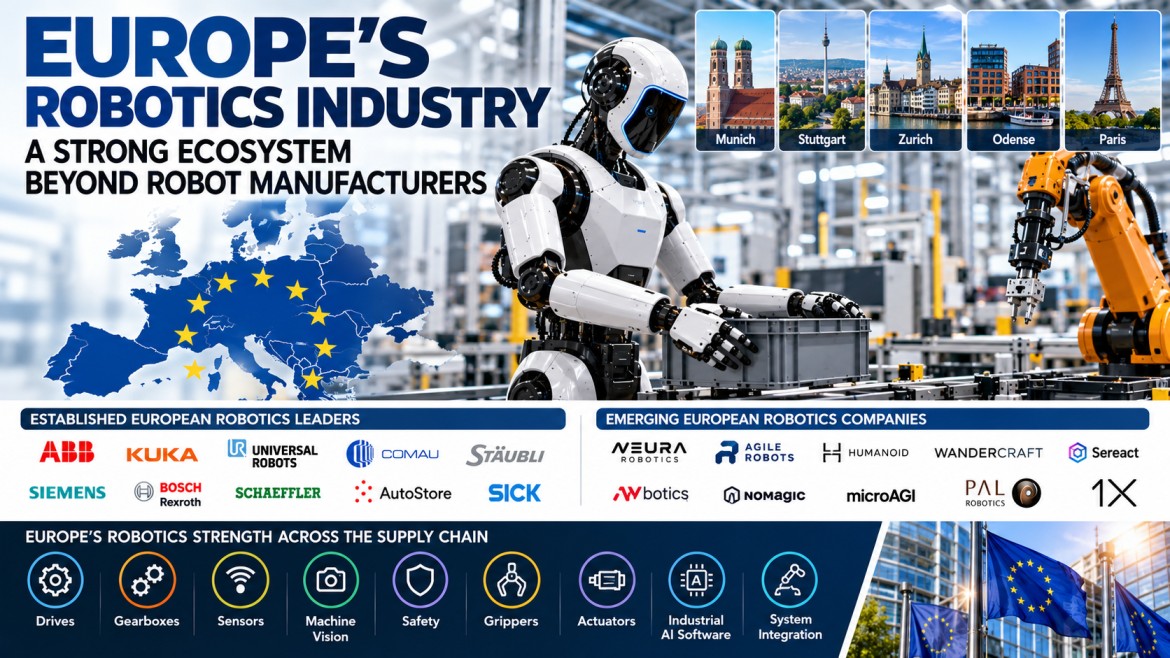
According to a recent overview shared by Erdem Ürün, Europe’s robotics strength extends well beyond robot manufacturers. The region has built a broad industrial ecosystem covering components, software, engineering and system integration.
Established Robotics Leaders
The European robotics landscape includes several established companies with strong positions across industrial automation and robotics.
The overview highlights:
- ABB
- KUKA
- Universal Robots
- Comau
- STÄUBLI Robotics
- Siemens
- Bosch Rexroth
- Schaeffler
- AutoStore
- SICK
These companies represent different parts of Europe's industrial automation ecosystem, from robotic systems and collaborative robots to sensors, controls and warehouse automation.
A New Generation of Robotics Companies
At the same time, European robotics is expanding into newer technology areas.
Companies highlighted in the overview include NEURA Robotics, Agile Robots, Humanoid, Wandercraft, Sereact, ANYbotics, Nomagic, microAGI, PAL Robotics and 1X.
These companies are developing technologies across humanoid robotics, intelligent manipulation, autonomous machines, Physical AI and specialized robotic systems.
Europe’s Real Advantage: The Supply Chain
One of the most important points from the analysis is that Europe's robotics strength is not limited to robot manufacturers.
A significant part of the ecosystem sits deeper in the value chain, including:
Drives | Gearboxes | Sensors | Machine Vision | Safety | Grippers | Actuators | Industrial AI Software | System Integration
This industrial base gives European robotics companies access to experienced suppliers, engineering capabilities and manufacturing customers.
Munich, Stuttgart, Zurich, Odense and Paris
Several European cities are emerging as important robotics ecosystems.
Munich, Stuttgart, Zurich, Odense and Paris bring together technology companies, research organizations, suppliers and industrial users.
These clusters can play an important role in helping robotics technologies move from research and development into commercial industrial applications.
Europe Faces Strong Global Competition
The global robotics race is becoming increasingly competitive.
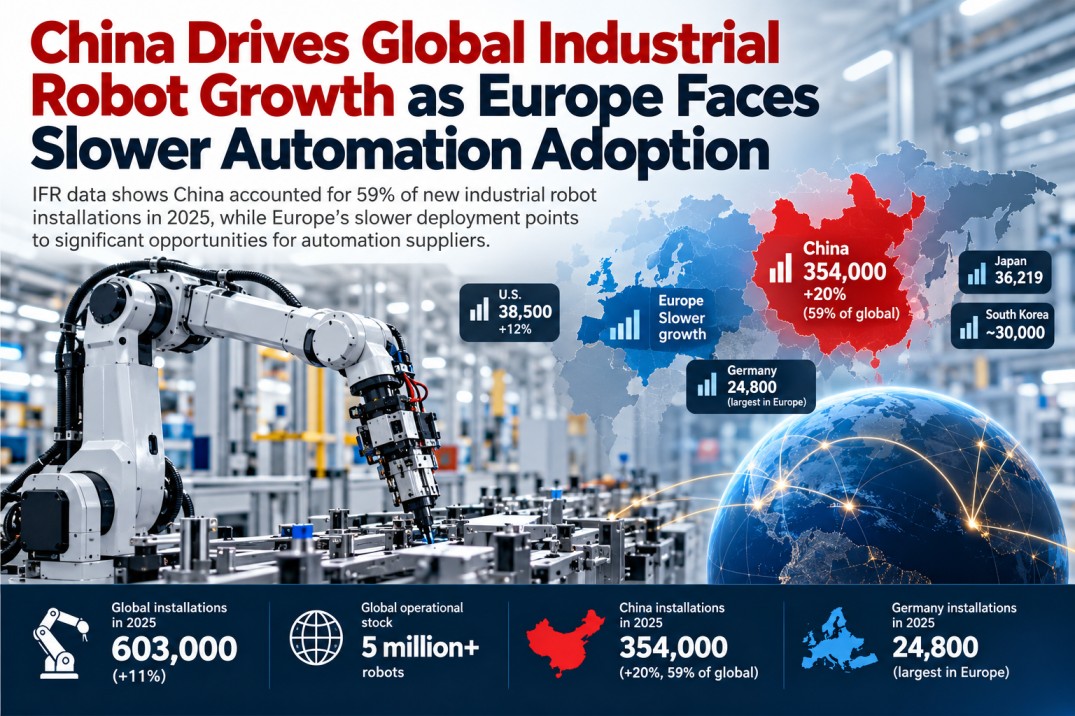
China is scaling robotics production and deployment rapidly, while the United States has significant advantages in capital, computing infrastructure and leading AI models.
Europe's strengths are different: industrial customers, automation expertise, engineering capabilities and a strong supplier ecosystem.
This creates an opportunity for Europe to compete through industrial specialization rather than simply matching the scale of other markets.
The Lab-to-Factory Challenge
For emerging robotics companies, developing the technology is only the first step.
The bigger challenge is moving a robot from a successful laboratory demonstration into a real factory.
That requires:
- Industrial customers
- System integrators
- Reliable suppliers
- Pilot projects
- Local partnerships
- After-sales service
- Scalable deployment models
The transition from pilot projects to production will determine which European robotics technologies become successful businesses.
Physical AI Could Reshape the Market
The rise of Physical AI and humanoid robotics is creating a new opportunity for European companies.
Europe already has expertise across industrial automation, sensing, safety, motion control and engineering. Combining these capabilities with modern AI could create new robotic systems capable of operating more flexibly in industrial environments.
The opportunity, however, will depend on how quickly companies can convert technological capabilities into reliable industrial deployments.
Conclusion
Europe may not be the world's largest robotics market, but its deep industrial ecosystem remains difficult to replace.
The next phase of European robotics will likely depend on connecting established automation expertise with emerging technologies such as Physical AI, humanoids, autonomous systems and intelligent manipulation.
The key question is no longer simply whether Europe can develop advanced robots. It is whether the region can move those technologies from the lab into factories and scale them into sustainable businesses.