DEEP Robotics Deploys Robot Dogs to Transform Spring Tea Harvest in China
AI-powered quadruped robots from DEEP Robotics and JD Logistics streamline tea leaf transport in Zhejiang, preserving quality and easing labor shortages.
Image Courtesy: Public Domain
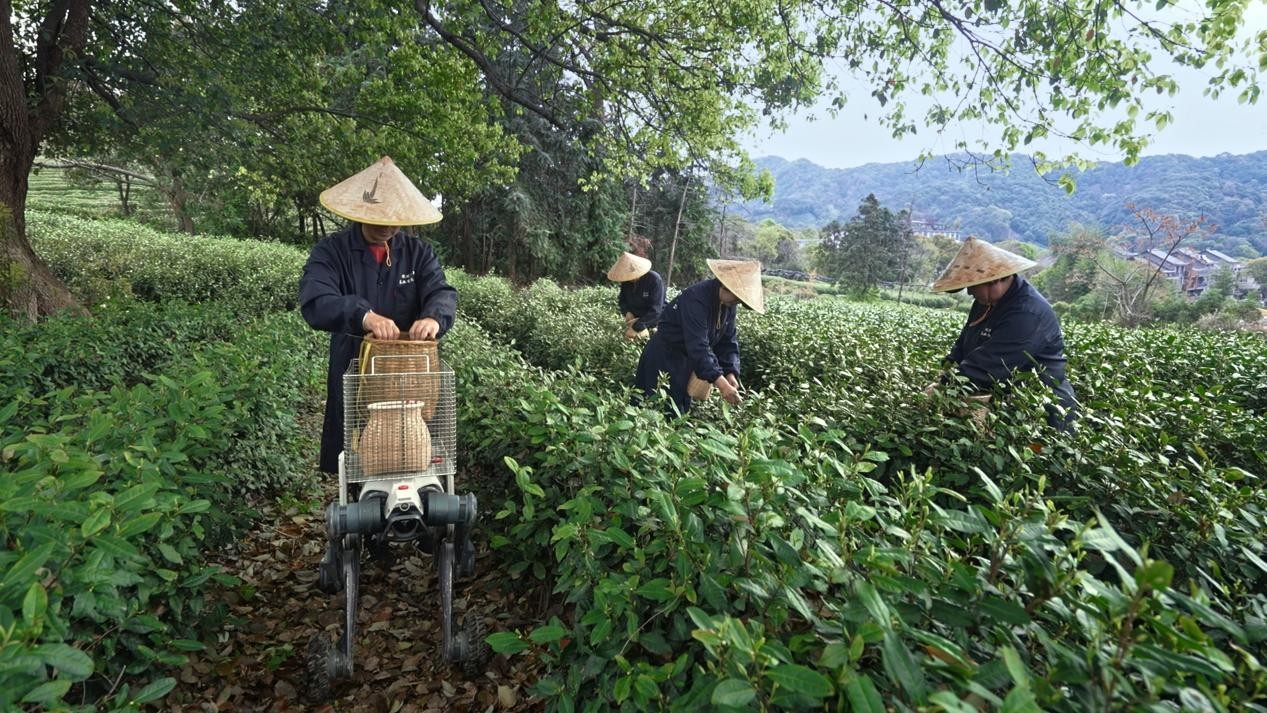
Spring tea season is here, and in Zhejiang's West Lake Longjing production area—one of China's most prized tea regions—DEEP Robotics has sent its robot dogs to work. The job? Hauling freshly picked tea leaves down the mountain so farmers don’t have to. Together with JD Logistics, the quadruped robotics solutions are trying to crack a problem that’s dogged premium tea production forever: getting delicate pre-Ming leaves off steep, narrow mountain paths and into the processing workshops fast enough. You’ve got about an hour before the leaves start losing what makes them special.
LYNX M20 Wheeled-Legged Robot Transforms into "Cyber Tea Farmer" at the Forefront of Agricultural Assistance
In the Longwu Standardized Tea Plantation in Hangzhou, DEEP Robotics' robot dogs have picked up a nickname around here: "cyber tea farmers." The AI-powered robots carry baskets of fresh tea leaves down winding hillsides, going straight at the "first kilometer" bottleneck that has always slowed the spring tea harvest. The whole idea behind putting robotics into the tea-picking supply chain is simple enough: move things faster, save farmers’ backs, and bring this centuries-old trade a step closer to going digital.
The way it’s worked for centuries: farmers strap on heavy bamboo baskets and trudge up and down narrow, winding mountain paths that can be genuinely dangerous. It’s grueling work. And with fewer young people willing to do it—rural labor shortages are a real thing now—productivity has barely budged. That’s where the robot dogs come in.
LYNX M20 and X30 Robots Navigate 50cm Paths and 45° Slopes for Fresh Leaf Transport
Two DEEP Robotics’ models are out in the tea fields right now. One is the LYNX M20 wheeled-legged robot, and the other is the X30 quadruped robot. They can both fit through passages as narrow as 50cm and climb slopes up to 45°, weaving between tea rows without any trouble. Mud, rocks, wet stone stairs—none of it slows them down. They just keep going, basket after basket, trip after trip down the mountain. Because they’re that nimble, the robots actually get the freshly plucked leaves from where they're picked all the way to the workshops without the usual holdups.
A Race Against Time: Hacking a Thousand-Year-Old Bottleneck
For West Lake Longjing tea, saying goes: "pre-Ming tea is as precious as gold." It's not just a figure of speech—the harvest window is incredibly tight. Once picked, the fresh leaves need to reach the workshop within an hour or the flavor starts to slip away. But the hills here are no joke. Winding paths, narrow trails, steep drops. Getting leaves down by hand has always been slow and tiring. So the arrival of DEEP Robotics' robot dogs is changing the math. It's a solution that actually works in practice.
The machines handle the hardest physical part of the harvest now. Farmers aren't getting injured, transport times are way shorter, and—crucially—the tea keeps more of its premium quality because it's processed faster.
Building a Smart Ecosystem for Rural Communities
The Hangzhou operation is just one piece of something bigger—a smart ecosystem that wraps around the whole tea-picking supply chain. The whole point: "picked, collected, and shipped on the same day." The robots make that possible by tightening the turnaround between harvest and processing—keeping the freshness Longjing spring tea is known for. DEEP Robotics and JD Logistics put together a "picked today, shipped today" delivery pipeline, and so far it’s working.
None of this is exactly new territory for DEEP Robotics, though. The company first got into agriculture with a public welfare harvest project in Chongqing—helping with the Fuling pickled mustard tuber harvest—where its robotics technology handled the grunt work of moving crops out of muddy fields so farmers didn’t have to do it all by hand.
DEEP Robotics has always been about solving real problems—not just building cool tech. Next up: more agricultural use cases, more industries, and more robotic solutions that actually hold up when it counts. Industrial inspection, agriculture, food supply chains—they want to be in all of it.