XCath Robotics Advances Remote Robotic Stroke Treatment with Iris System
28 September 2026 | Interaction | By Editor Robotics Business NEWS <editor@rbnpress.com>
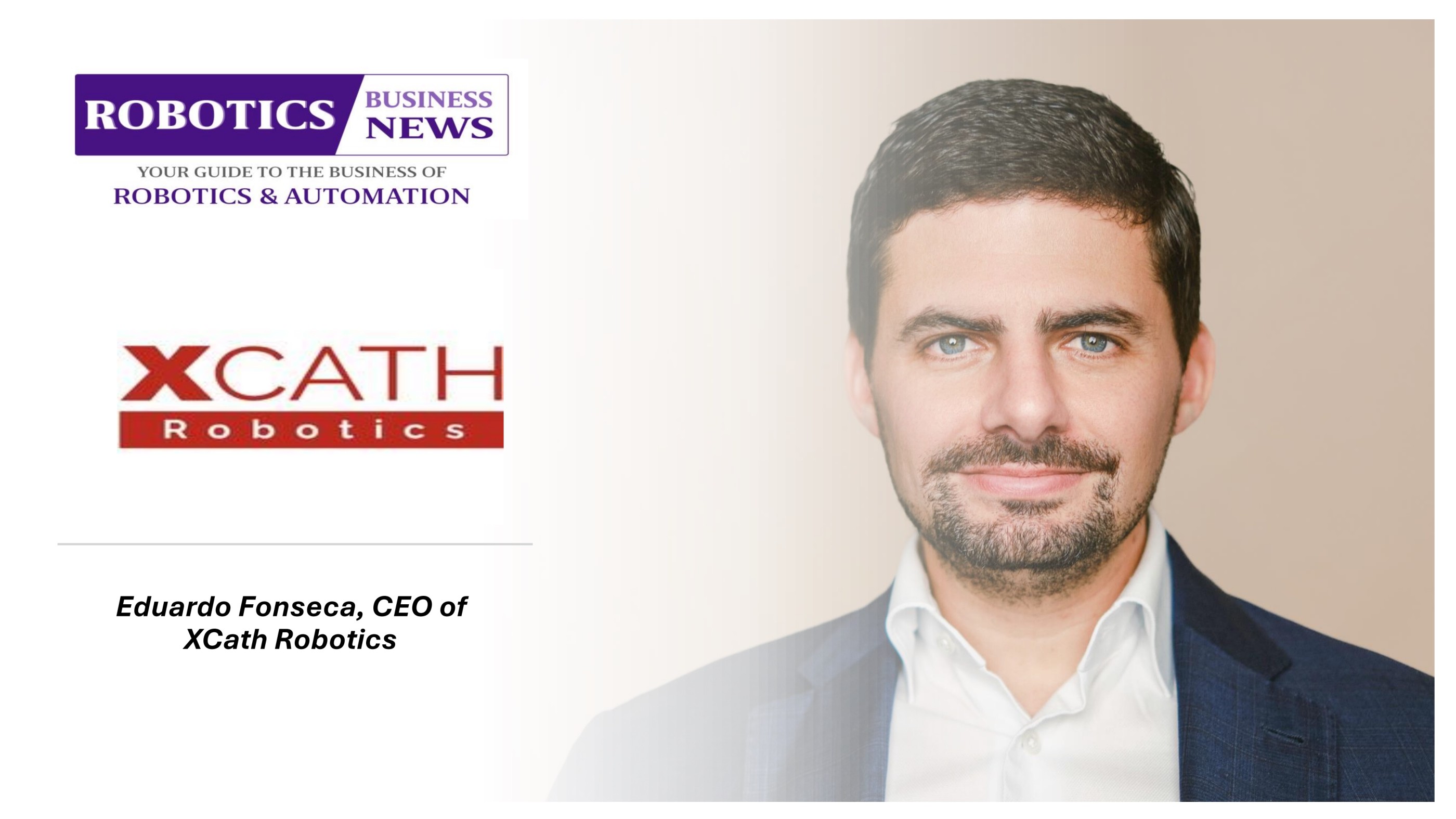
XCath Robotics CEO Eduardo Fonseca discusses Iris, remote thrombectomy, clinical validation, and the future of telerobotic endovascular care.
In this conversation with Robotics Business News, Eduardo Fonseca, CEO of XCath Robotics, discusses the company’s Iris Surgical Robotic System and its potential to transform access to highly specialized stroke care. Fonseca explains the lessons from XCath’s first remote telerobotic mechanical thrombectomy in a living patient, the engineering challenges of remote neurovascular procedures, the company’s regulatory and clinical development strategy, and its broader vision for extending endovascular expertise beyond geographic boundaries.
What does the FDA Breakthrough Device Designation mean for XCath’s Iris System, and how does it accelerate your path toward bringing remote robotic-assisted thrombectomy to patients?
The FDA’s Breakthrough Devices Program is designed to support the development of medical devices that have the potential to provide more effective treatment for patients with life-threatening or irreversibly debilitating conditions. The designation granted to XCath covers the Iris Surgical Robotic System, specifically for remote robotic-assisted mechanical thrombectomy in patients with acute ischemic stroke. This follows the company’s landmark achievement in March 2026 – the world’s first remote telerobotic mechanical thrombectomy in a living patient.
In practical terms, through this designation, we aim to have more opportunities to interact with FDA experts during the regulatory development and review process as we advance the Iris System. It also gives XCath a useful forum for reaching agreement with the FDA on an appropriate approval pathway – an important step towards the Iris System potentially receiving commercial authorization from the FDA.
XCath recently completed the world’s first remote telerobotic mechanical thrombectomy in a living patient. What were the most important technical and clinical lessons from that milestone?
In March 2026, during a clinical investigation called Operation Robo Angel, Dr. Vitor Mendes Pereira operated the Iris System from a control station in Santiago, Panama. The patient was more than 120 miles away at The Panama Clinic in Panama City. The system let him precisely navigate devices through the patient’s intracranial blood vessels with no perceptible latency. He removed the clot on the first pass and fully restored blood flow to the brain. The patient, a man in his late sixties, has since almost fully recovered.
A key lesson was that the procedure depended on coordination across disciplines. For one week, physicians and clinical research coordinators staffed the emergency departments of three major public hospitals in Panama to screen potential stroke patients. Together, physicians, engineers, hospitals, and public-health teams formed one integrated system that could identify a critically ill stroke patient, and deliver treatment without delay – a treatment the patient would otherwise not have had access to.
The patient arrived with a stroke severity score (NIHSS) of 21 and was severely ill. He was unable to speak, comprehend anything, had complete paralysis of his right arm, and was minimally conscious.
Upon waking up from the procedure, he was moving his right arm and answering questions appropriately. By the next day, his stroke severity score was 2, which is considered a mild stroke. He was discharged on the third day and was walking independently within two weeks. Six months on, he has almost fully recovered.
How does the Iris System enable physicians to perform highly precise neurovascular procedures remotely, and what role does sub-millimeter robotic control play in this capability?
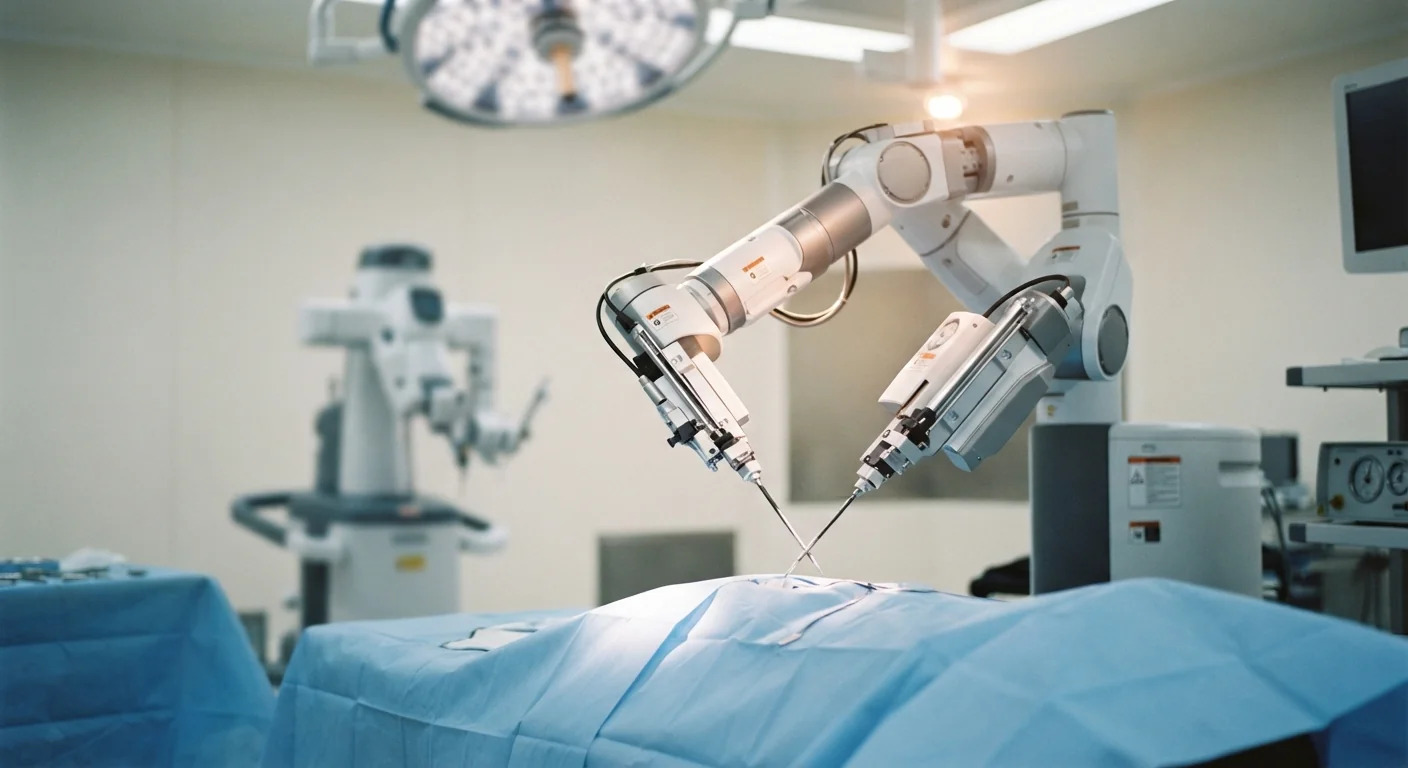
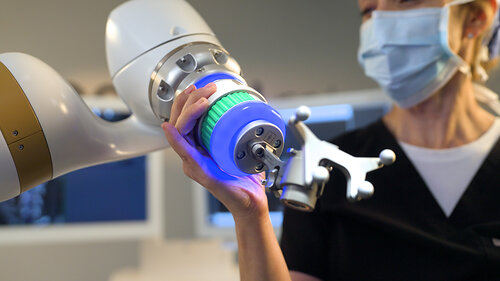
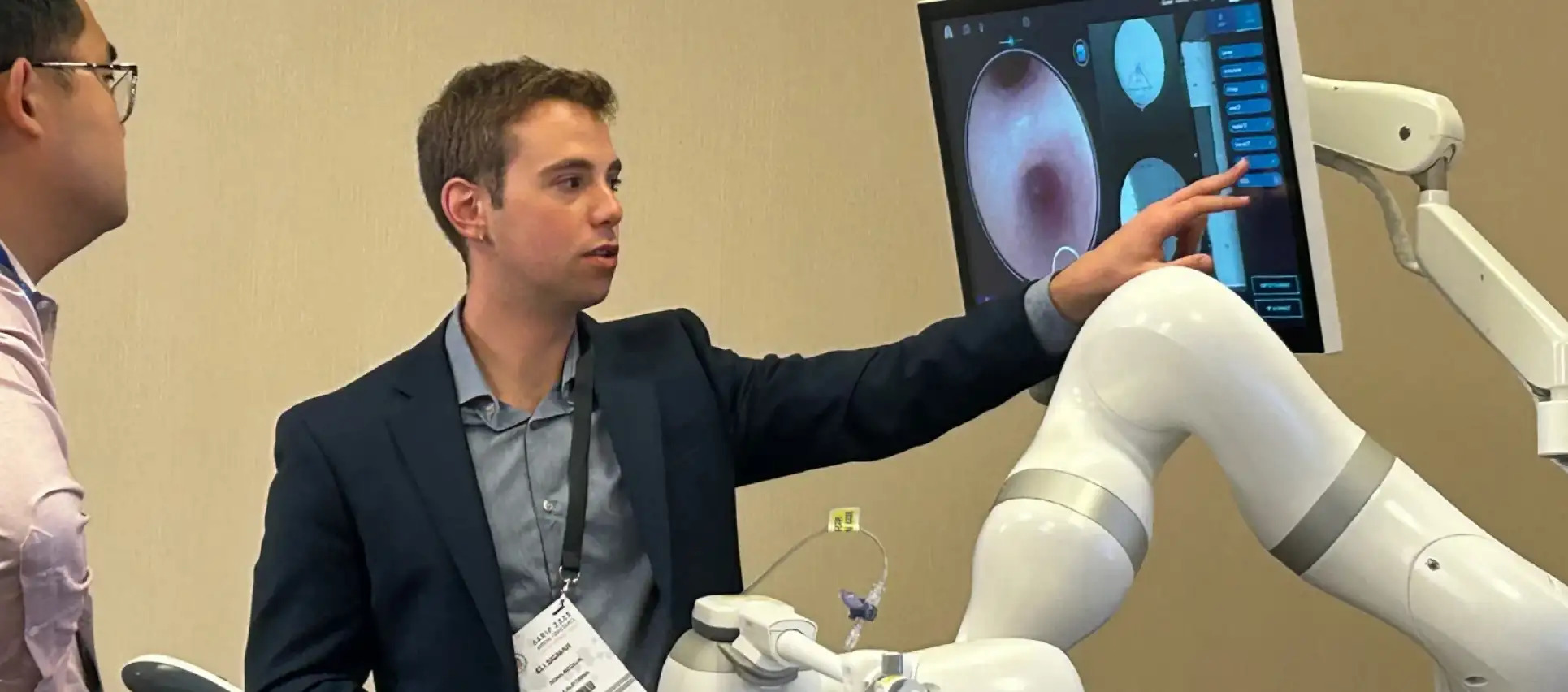
The Iris System is a triaxial endovascular robotic system. It is the only one currently in development to have achieved remote robotic intracranial navigation or intracranial neurointerventional procedures in human clinical investigation. It is designed to manipulate catheters, guidewires and therapeutic devices in parallel with sub-millimeter accuracy.
In broad terms, an interventional neuroradiologist sits at a control console, which may be in a different hospital entirely from the patient. At the bedside, a team of nurses and doctors prepares the patient and inserts neurointerventional devices – around three feet long – into the femoral artery. The specialist then uses the console to guide the wire up through the artery to the brain, where a stent is expanded to enclose the clot and/or a clot aspiration device is deployed. The devices are then withdrawn with the clot captured inside it, aiming to restore full blood flow to the brain.
In Operation Robo Angel, Dr. Pereira was stationed at a control station in Santiago, Panama, while the patient was more than 120 miles away at The Panama Clinic in Panama City, where a trained bedside team worked directly with the patient. The Iris System enabled Dr. Pereira to precisely navigate devices through the patient’s intracranial blood vessels with no perceptible latency, removing the clot on the first pass and fully restoring blood flow to the brain.
Dr. Pereira has described the experience of operating remotely as indistinguishable from operating at the patient’s bedside, provided the connection meets pre-validated thresholds for data transfer speed and stability.
Stroke treatment is highly time-sensitive. How can remote robotic intervention help address the geographic and specialist-access barriers that currently prevent many patients from receiving timely mechanical thrombectomy?
Remote robotic intervention could help overcome the geographic and specialist-access barriers to mechanical thrombectomy by allowing a highly specialized neurointerventionalist to treat a patient without being physically present at the hospital. Rather than requiring every hospital to have its own round-the-clock interventionalist, a specialist could potentially provide care remotely to patients hundreds or even thousands of kilometers away, extending access to expertise into areas where it is currently unavailable.
This is particularly important because intracranial navigation is highly complex and requires a small group of highly skilled physicians capable of performing delicate maneuvers within the neurovasculature. The limited number and uneven distribution of these specialists means that many hospitals cannot provide thrombectomy around the clock – or at all – even where the wider infrastructure to treat stroke may exist. By enabling remote intervention, the Iris System could allow a single neurointerventionalist to broaden their coverage across multiple locations, helping to close the gap between where specialists are and where patients need them.
The need for this is significant. Mechanical thrombectomy is widely regarded as the gold-standard treatment for large vessel occlusion (LVO) stroke, the deadliest and most disabling type of ischemic stroke. However, without timely treatment, 77% of LVO stroke patients either die or are left with severe disability – every minute counts.
However, access to the procedure is deeply unequal, with an estimated 87% of stroke deaths and disability occurring in low- and middle-income countries, where specialists are few and the infrastructure for time-critical care is often non-existent. Almost 80% of the world’s hospitals that are equipped to perform thrombectomy are concentrated in just six countries – the US, UK, Brazil, France, Germany, and Australia. In Africa, fewer than 15% of the continent’s hospitals have dedicated stroke units.
The gap persists even in wealthy healthcare systems. In the UK, 15% of stroke patients could benefit from thrombectomy each year, but only around 4.5% receive it, with stark regional disparities–- thrombectomy rates range from 10% of patients in London to just 1% in the East of England, partly due to a shortage of stroke consultants.
Remote robotic intervention is therefore not about replacing local clinicians, but about extending the reach of specialist expertise. Where the necessary infrastructure, connectivity, local clinical teams and regulatory frameworks are in place, it could create a model in which specialist stroke expertise is no longer constrained by the physical location of the physician.
What are the biggest engineering and safety challenges involved in performing a complex neurovascular procedure remotely, particularly around latency, reliability, communication connectivity, and physician control?
Connectivity is fundamental to making remote robotic intervention work safely. Before Operation Robo Angel, we spent months testing and validating the dedicated fiber connection between the two hospitals against the speed and stability requirements needed for telesurgery, with our engineers continuing to monitor and validate the connection throughout the trial week. Once those requirements were met, the system performed without noticeable latency or delay in the imaging compared with operating in the same hospital as the patient.
But the challenge is bigger than proving that the technology works under clinical investigation conditions. If remote intervention is going to expand access to stroke treatment, the system needs to work reliably in different hospitals and over different networks, including in parts of the world where connectivity and infrastructure may be less consistent. That is why we are designing the Iris robot’s network architecture to be robust, practical and affordable enough to be deployed beyond the most advanced healthcare systems.
There is also the human side of the technology. A remote robotic system needs to be intuitive for both the specialist operating it and the team at the patient’s side. It has to be easy to learn, easy to use and familiar enough that clinicians can rely on it when it matters. I take some of my inspiration from my aviation hobby, where familiarity with equipment is an important part of safety. A system that only comes out in an emergency every few months is not necessarily the safest or commercially viable system.
Our goal is therefore not to create a robot that is always on standby until there is a patient. We want Iris to be useful and value add for routine procedures as well, so that physicians and clinical teams build experience with the system in everyday practice. That is what will make remote intervention a practical way of extending specialist stroke care.
How is xCath approaching clinical validation and regulatory requirements as the Iris System progresses from investigational procedures toward broader clinical use?
The Iris System is at an early feasibility stage. Its current design is intended to assess initial clinical safety and provide insight into device design in a controlled clinical setting. We will continue to learn from new trials in real-world clinical settings in order to shape a device intended to be used more broadly.
To date, xCath’s technology has been used in two investigational programs, treating four patients in total. Both were conducted outside the United States under the applicable regulatory and ethics approvals. The first in November 2025 involved three patients with complex intracranial anterior and posterior circulation brain aneurysms. The second was in March 2026 when Operation Robo Angel achieved the world’s first remote telerobotic mechanical thrombectomy in a living patient.
The next stage is to establish that the approach is replicable across multiple sites. We are now looking to expand our trials into countries outside the US, in cities where patients currently have limited or no timely access to mechanical thrombectomy.
In the US, our FDA Breakthrough Device designation gives us an opportunity to work closely with the FDA as we establish the right regulatory pathway and supporting evidence. We expect that this will involve further clinical studies, extensive testing of the robotic system and work to ensure the technology is intuitive, secure, and safe for the physicians and clinical teams using it.
Ultimately, the timing of commercial availability will depend on the results of those studies and the regulatory requirements and decisions in each market.
Beyond remote thrombectomy, how do you see robotic and telerobotic technologies transforming access to other highly specialized endovascular and neurovascular procedures?
Our ambition is bigger than building a robot for stroke. We are developing an endovascular robotic platform that can support a much broader range of endovascular procedures.
We deliberately started with some of the most technically demanding endovascular procedures, because if we can demonstrate that the system can navigate safely and precisely inside the brain’s blood vessels, that creates a foundation for applying the technology to other procedures. Before Operation Robo Angel, our system used an early feasibility study at the Panama Clinic in November 2025 to treat three patients with complex brain aneurysms – which are considered more technically challenging than mechanical thrombectomy. Physicians were able to navigate the system through the patients’ brain vessels with sub-millimeter precision and deploy multiple commercially available devices used to treat aneurysms.
That experience showed us that the technology has potential well beyond thrombectomy. Over time, we see opportunities across a range of endovascular procedures where the anatomy is complex, precision is critical and/or access to highly specialized physicians is limited.
The longer-term opportunity is also to combine robotics with remote intervention. If a specialist can safely control the system from another location, you can start to think differently about how specialist care is delivered. Instead of concentrating endovascular expertise in a small number of major centers, we could potentially extend that expertise to hospitals and patients that do not currently have timely access to it.
We are still at an early stage, so our priority is to prove the technology safely and build the clinical evidence needed for each application. But ultimately, we want Iris to be a platform that can expand access to non-neuro endovascular care, not a technology designed for just one procedure.
Looking ahead three to five years, what is your vision for XCath’s role in creating a globally connected model of robotic stroke care, and what milestones will be critical to achieving that vision?
Our vision is to build towards a model of stroke care where a specialist’s expertise is no longer limited by their physical location. If Iris can enable a neurointerventionalist to safely treat a patient from hundreds or thousands of miles away, we could help bring timely mechanical thrombectomy to patients who currently have limited or no access to it.
There are a few important steps between where we are today and that vision. The first was demonstrating that remote robotic thrombectomy is possible, which we achieved with Operation Robo Angel. The next is showing that we can do it consistently across different hospitals, clinical teams and healthcare systems. We have been working towards expanding our clinical studies to build that evidence.
From there, the focus will be on building the clinical and regulatory pathways needed to expand the technology more widely. That means having a very valuable business model for all stakeholders, generating robust clinical evidence, demonstrating that the system is reliable in different real-world settings and ensuring that physicians and bedside teams can use it safely and effectively.
Regulation will also be a critical part of making this model work internationally. Any remote procedure has to comply with the laws, medical regulations and licensing requirements in the countries involved. We will need to work closely with NGOs, regulators, hospitals and healthcare partners to make sure the right framework is in place.
Ultimately, we will measure success not simply by the number of hospitals using Iris, but by the lives we help save and the disability we help prevent. Our ambition is to bring specialist stroke care to millions through a reliable, scalable and valuable model that connects patients with the physicians who have the expertise to treat them, wherever they are.